Ol’ Skool Praise
Choirs, quartets, hymns and the voices that built the sound.
Traditional praise, holy hip-hop, gospel R&B and exclusive SONday servUS mixes—curated by DJKP74.
The full SONday servUS rotation continues from one mix to the next.
Choirs, quartets, hymns and the voices that built the sound.
Holy hip-hop, gospel R&B and music moving the culture forward.
Traditional gospel vocals meet hip-hop production and the Word.
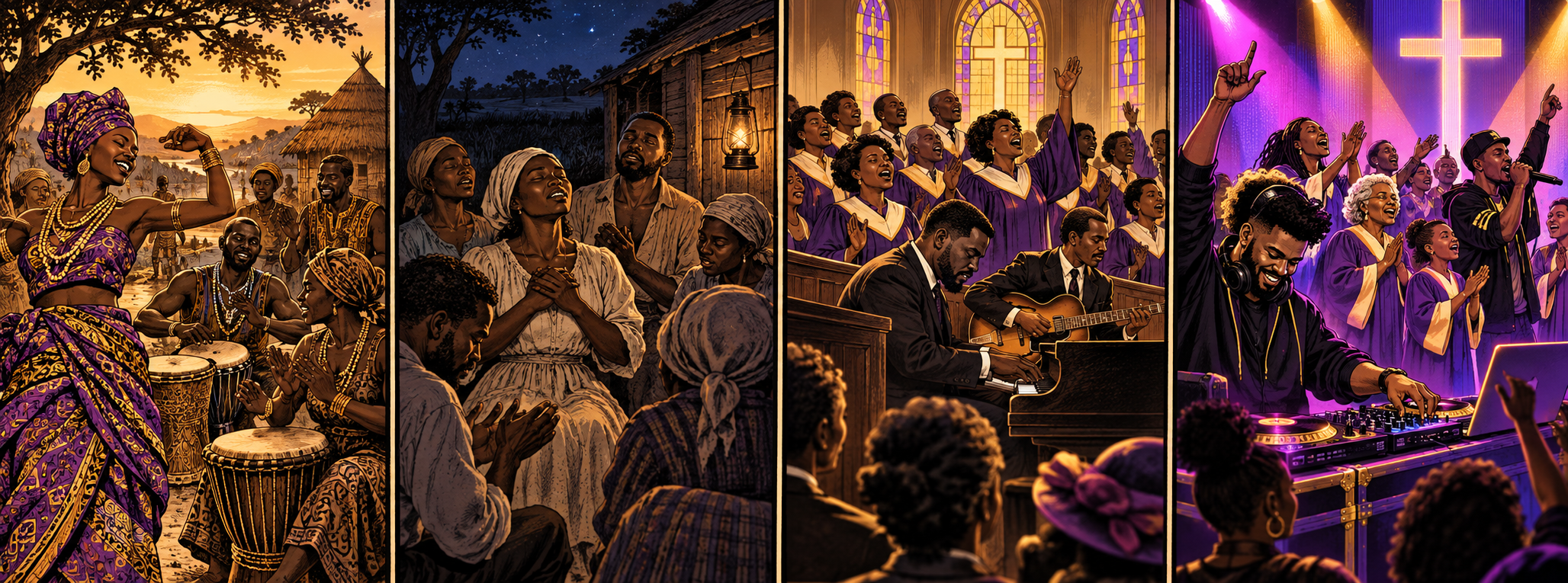
You know the music—but do you KNEW the history? Follow the surprising, documented journey of Black sacred music before Gospel had a name and after it became a worldwide sound.
West and Central African musical traditions met Black religious life under enslavement, shaping spirituals, Black hymns, jubilee singing, quartet traditions and Holiness-Pentecostal worship.
Blues feeling, new rhythms and instruments entered sacred music, meeting resistance before artists transformed those sounds into a bold Gospel language.
Through Thomas A. Dorsey, Mahalia Jackson, Sister Rosetta Tharpe and many others, Gospel moved from sanctuaries to records, radio, concert halls and the world.
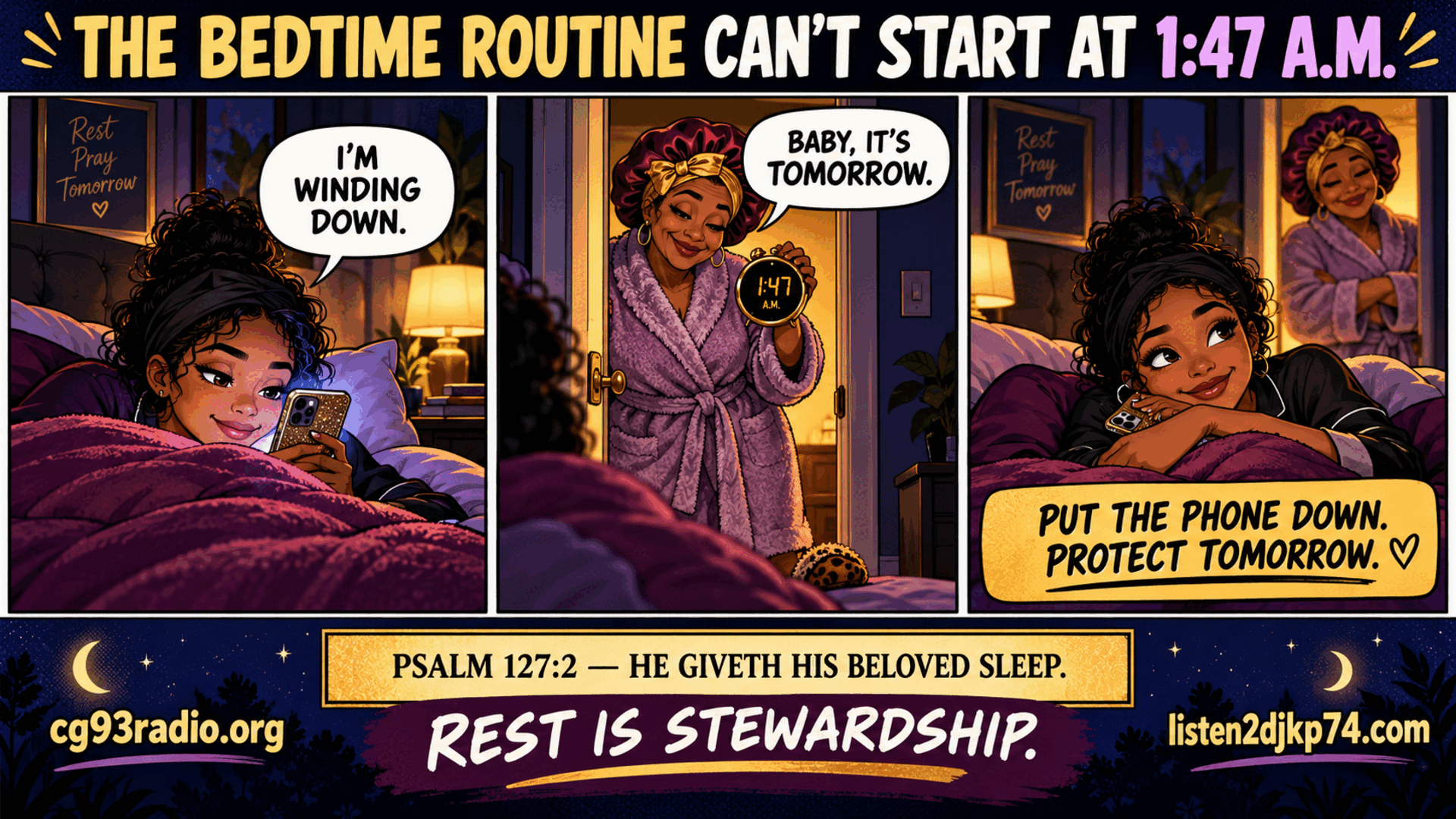 TODAY’S CULTURE COMIC
Put the phone down. Protect tomorrow. Psalm 127:2
Previous daily comics remain available here for reference.
 OCTOBER 21, 2026The Draft Won’t Post Itself
 OCTOBER 20, 2026The To-Do List Didn’t Catch the Holy Ghost
 OCTOBER 19, 2026The Password ‘1234’ Needs Deliverance
 OCTOBER 18, 2026The Suit Didn’t Iron Out the Attitude
 OCTOBER 17, 2026The Closet Is Not a Time Capsule
 OCTOBER 16, 2026The Reply-All Button Needs Discernment
 OCTOBER 15, 2026The Salad Didn’t Cancel the Fries
 OCTOBER 14, 2026The Screenshot Skipped the Whole Story
 OCTOBER 13, 2026The Volume Didn’t Make You More Right
 OCTOBER 12, 2026The Shortcut Has Traffic Too
 OCTOBER 11, 2026Don’t Leave Your Patience in the Pew
 OCTOBER 10, 2026The Broom Is Not Under Spiritual Attack
 OCTOBER 9, 2026Don’t Carry Monday Into Your Weekend
 OCTOBER 8, 2026The Meeting Could Have Been a Message
 OCTOBER 7, 2026The Sale Didn’t Save You Money If You Didn’t Need It
 OCTOBER 6, 2026The Gas Light Is Not a Prayer Request
 OCTOBER 5, 2026Busy Is Not the Same as Built
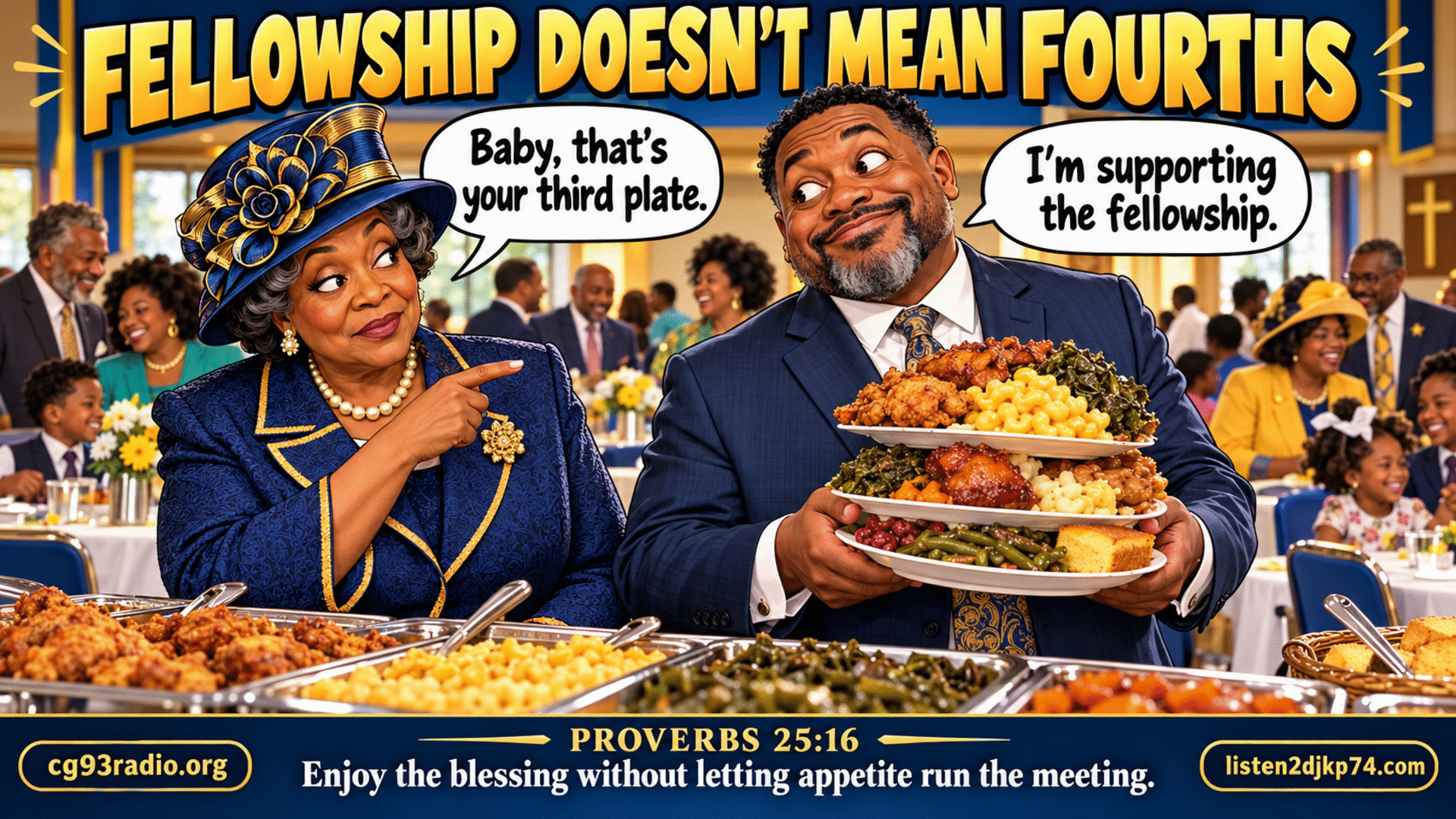 OCTOBER 4, 2026Fellowship Doesn’t Mean Fourths
 OCTOBER 3, 2026Saturday Isn’t a Storage Unit for All Week’s Excuses
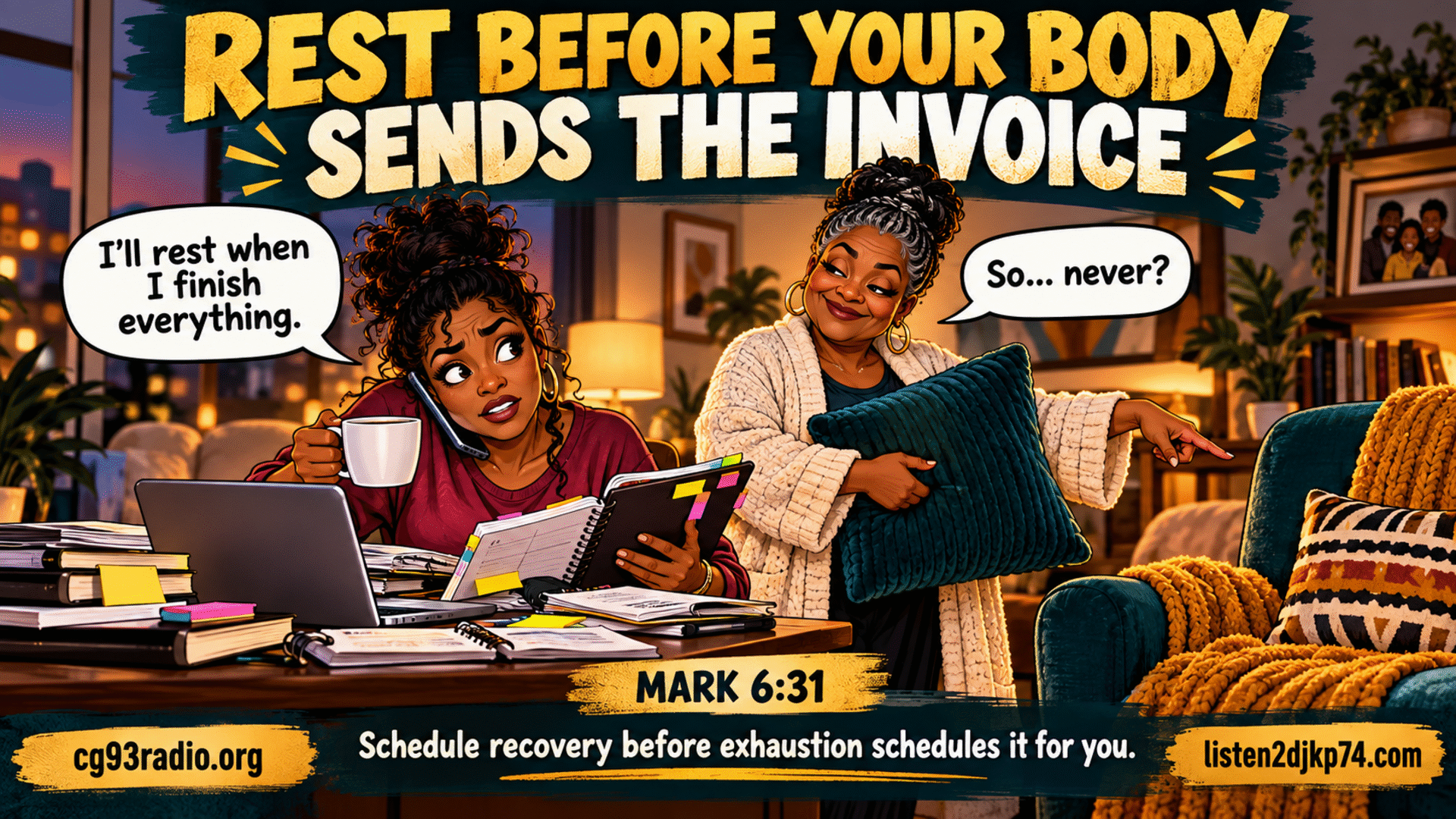 OCTOBER 2, 2026Rest Before Your Body Sends the Invoice
 OCTOBER 1, 2026The Month Changed—Did the Plan?
 SEPTEMBER 30, 2026Don’t Pray for Open Doors Then Ignore the Email
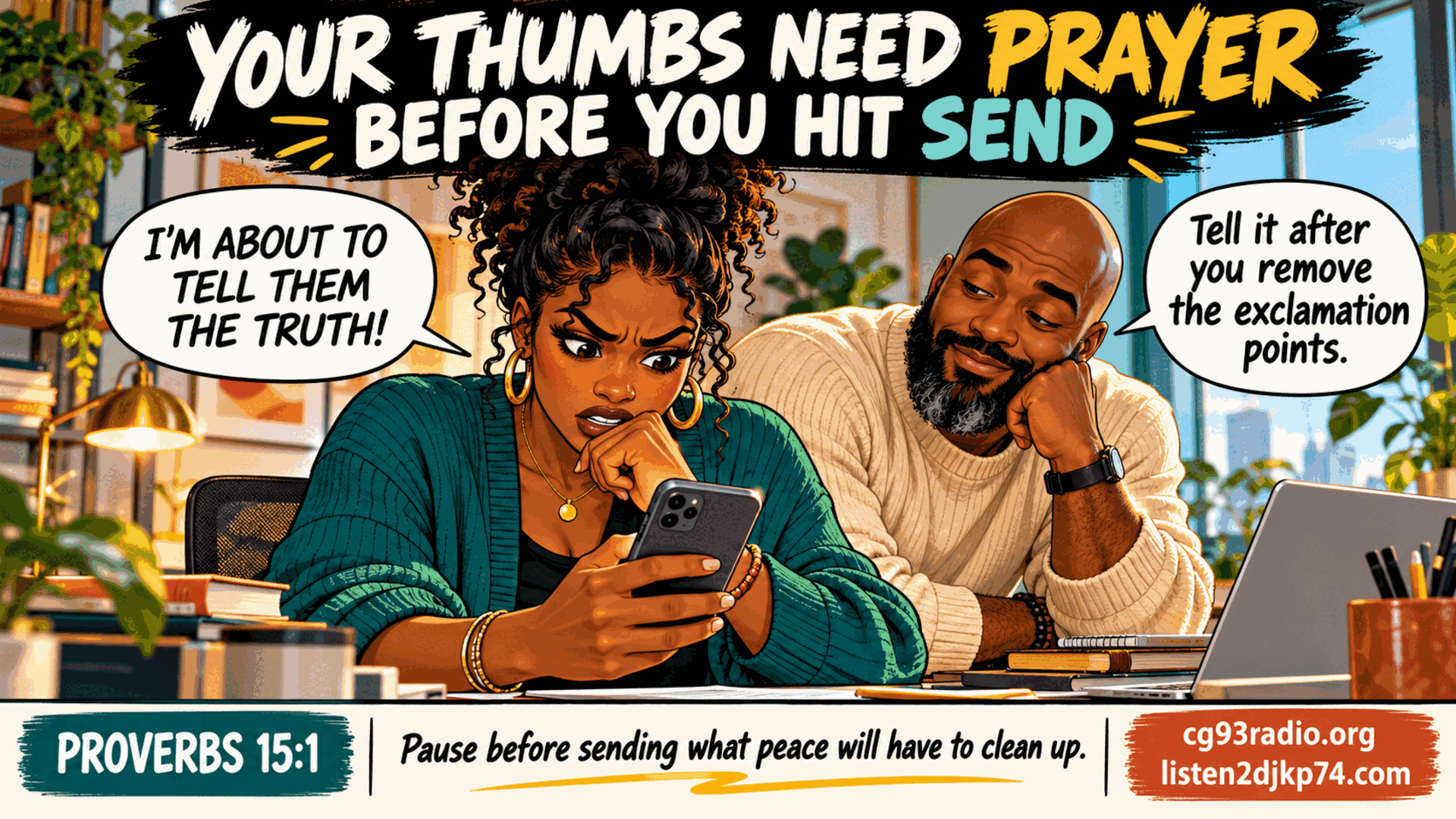 SEPTEMBER 29, 2026Your Thumbs Need Prayer Before You Hit Send
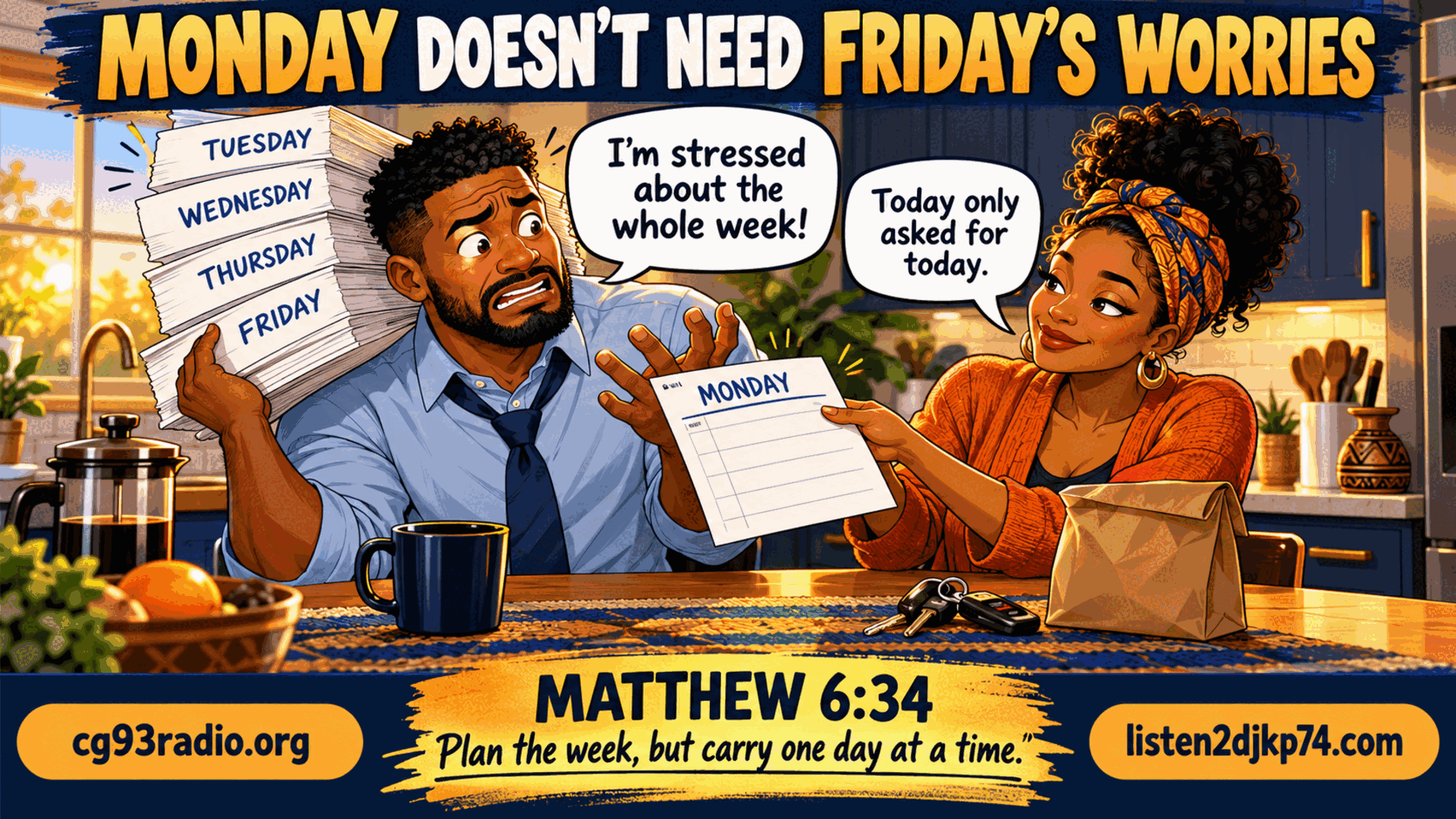 SEPTEMBER 28, 2026Monday Doesn’t Need Friday’s Worries
 SEPTEMBER 27, 2026The Sermon Wasn’t a Rental—Take It Home
 SEPTEMBER 26, 2026The Clutter Won’t Leave During the Praise Break
 SEPTEMBER 25, 2026Payday Is Not Permission to Lose the Plan
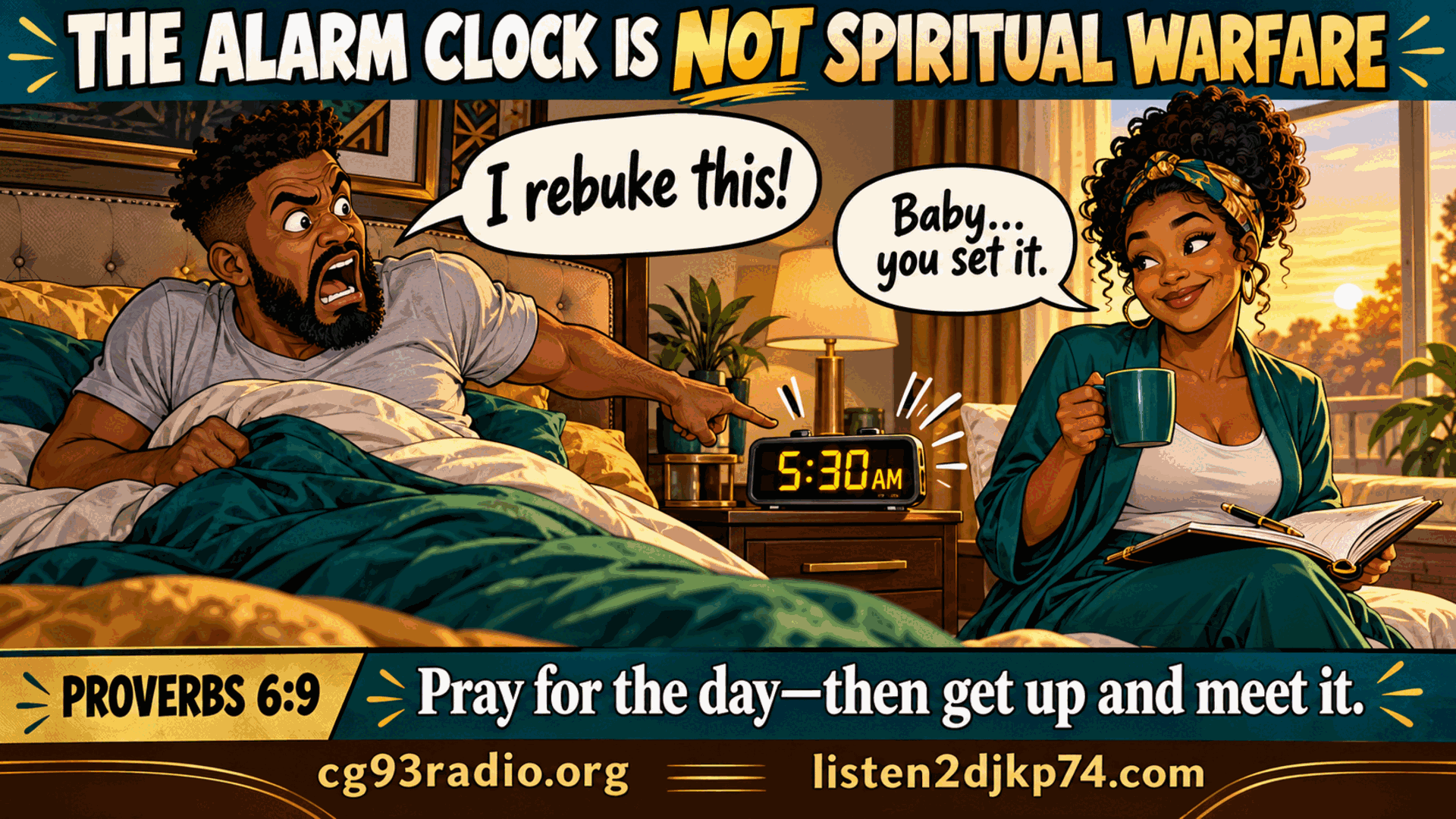 SEPTEMBER 24, 2026The Alarm Clock Is Not Spiritual Warfare
 SEPTEMBER 23, 2026Every Decision Doesn’t Need a Group Chat
 SEPTEMBER 22, 2026The Grass Is Greener Where You Stay Consistent
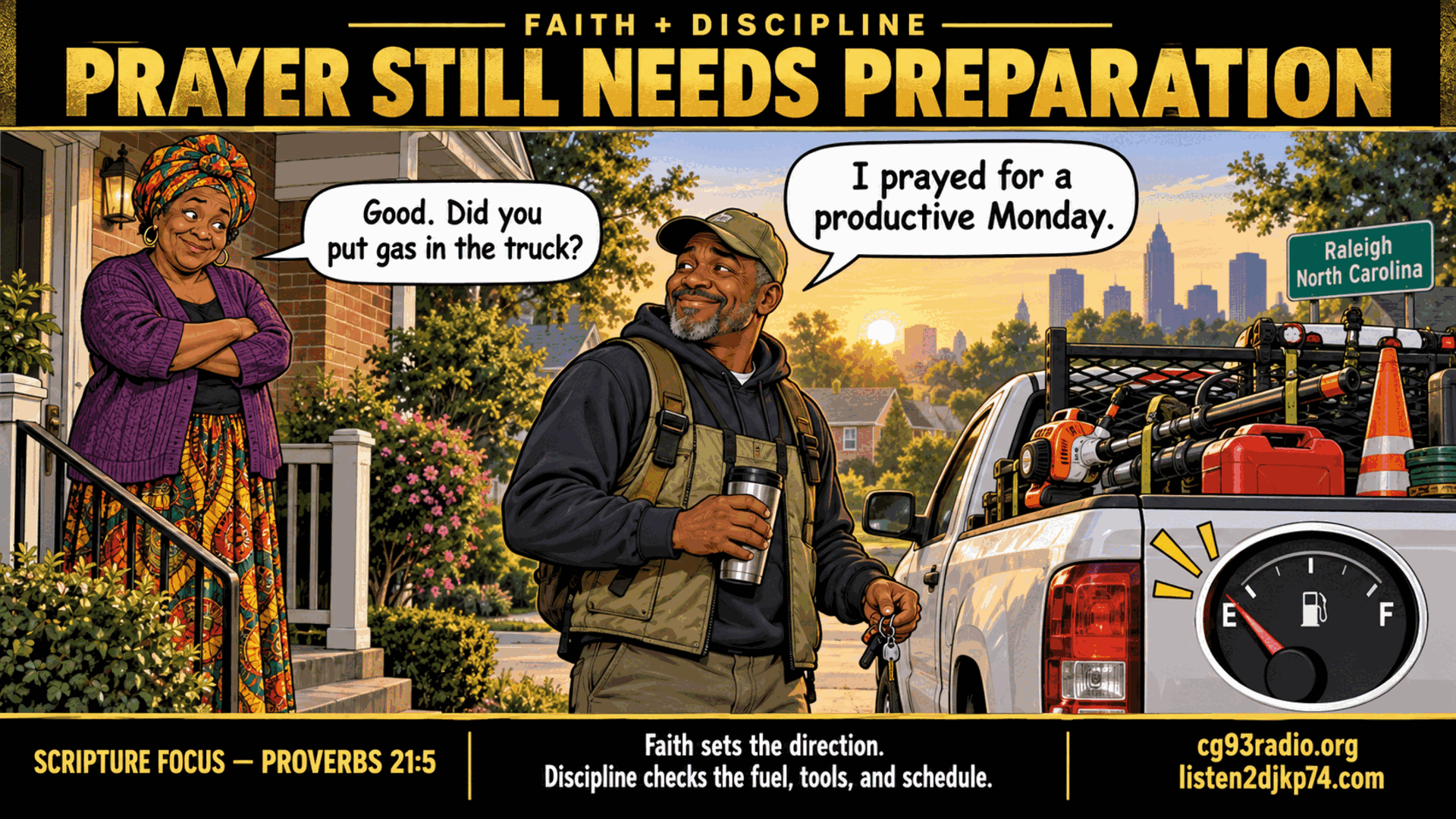 SEPTEMBER 21, 2026Prayer Still Needs Preparation
 SEPTEMBER 20, 2026Don’t Rush the Recipe
 SEPTEMBER 19, 2026Small Steps Still Count
 SEPTEMBER 18, 2026Read the Instructions Before You Rebuke the Screws
 SEPTEMBER 17, 2026Stop Watering What God Told You to Pull
 SEPTEMBER 16, 2026Put the Phone on DND—Your Purpose Is Calling
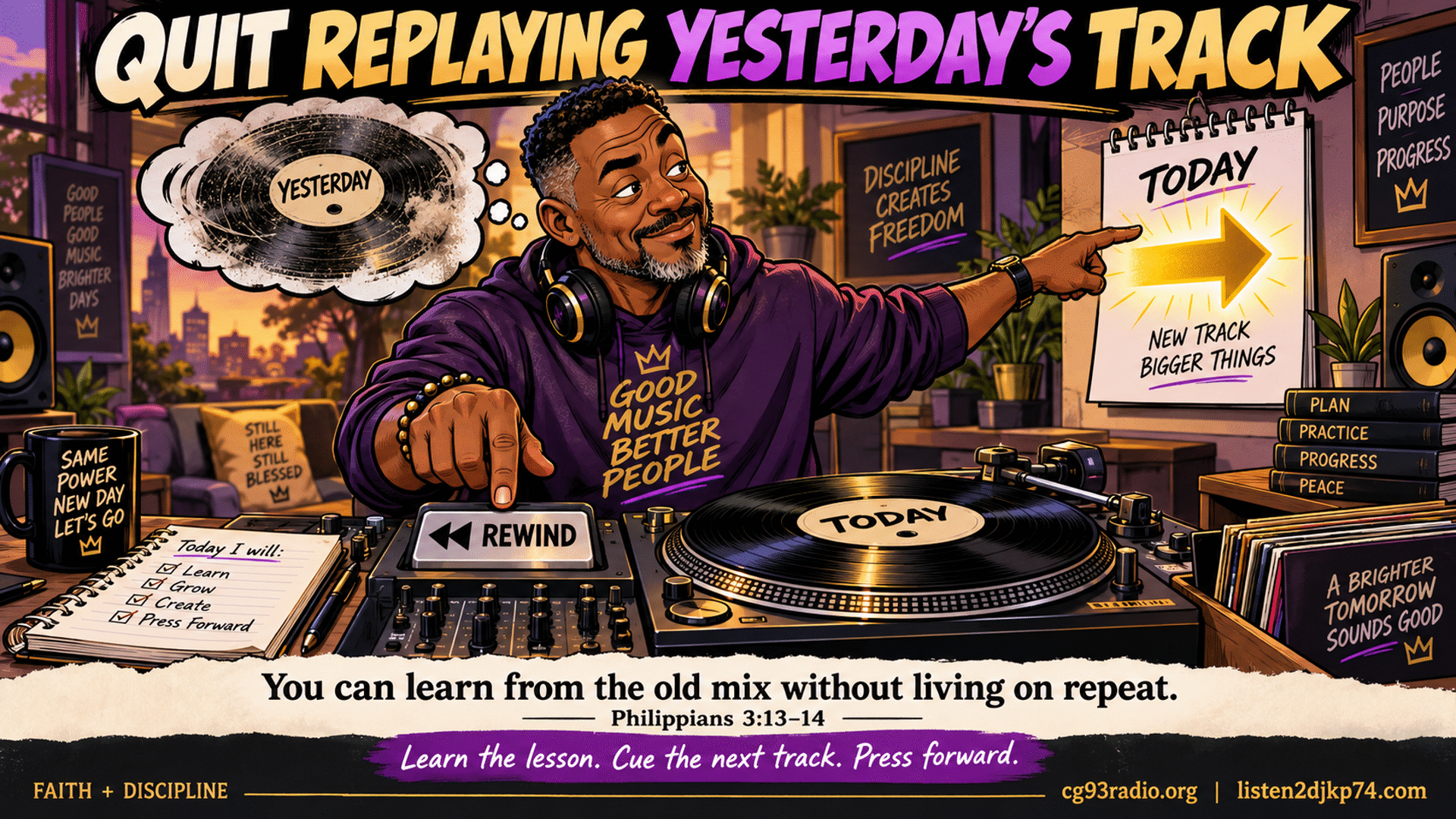 SEPTEMBER 15, 2026Quit Replaying Yesterday’s Track
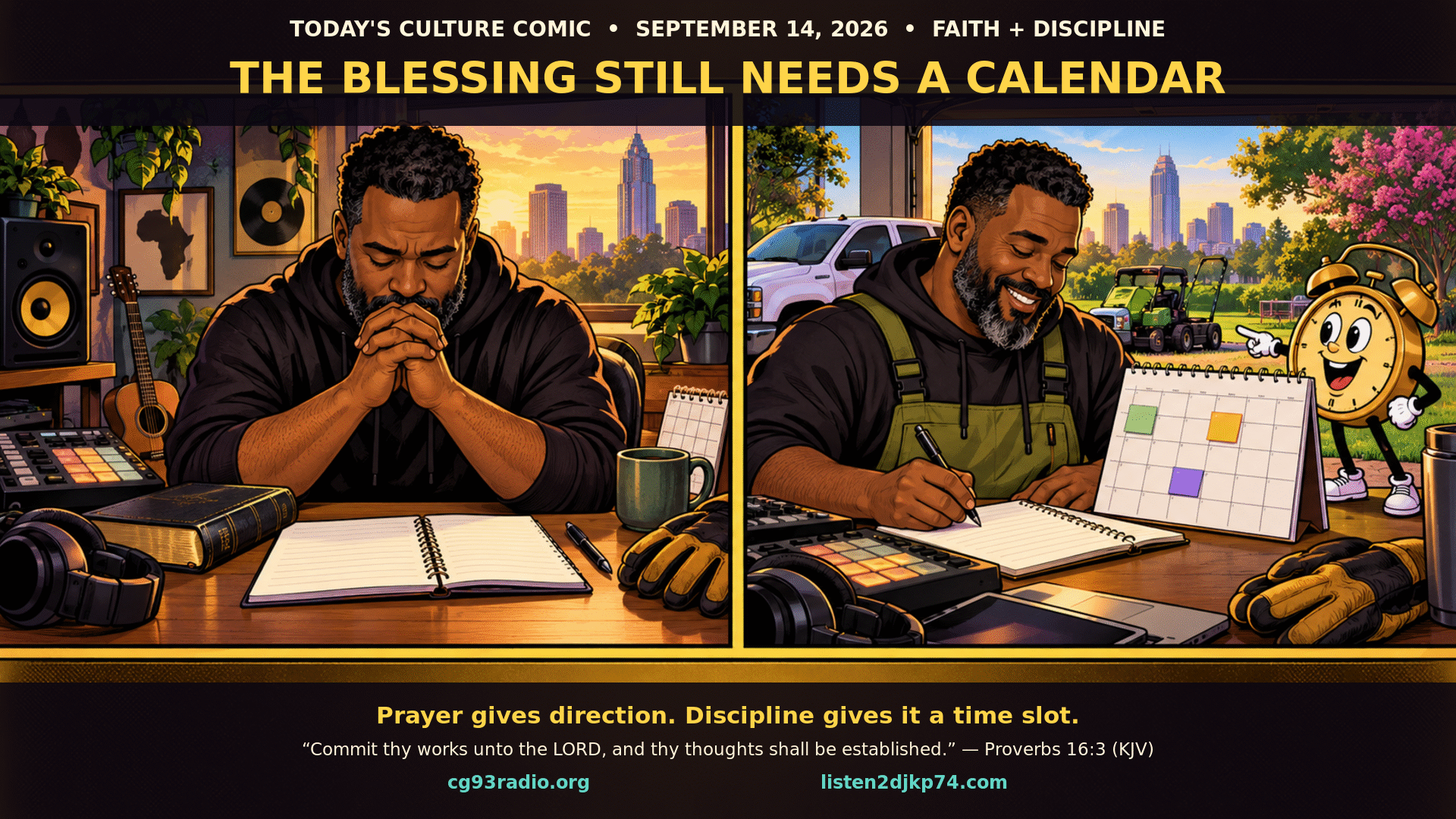 SEPTEMBER 14, 2026The Blessing Still Needs a Calendar
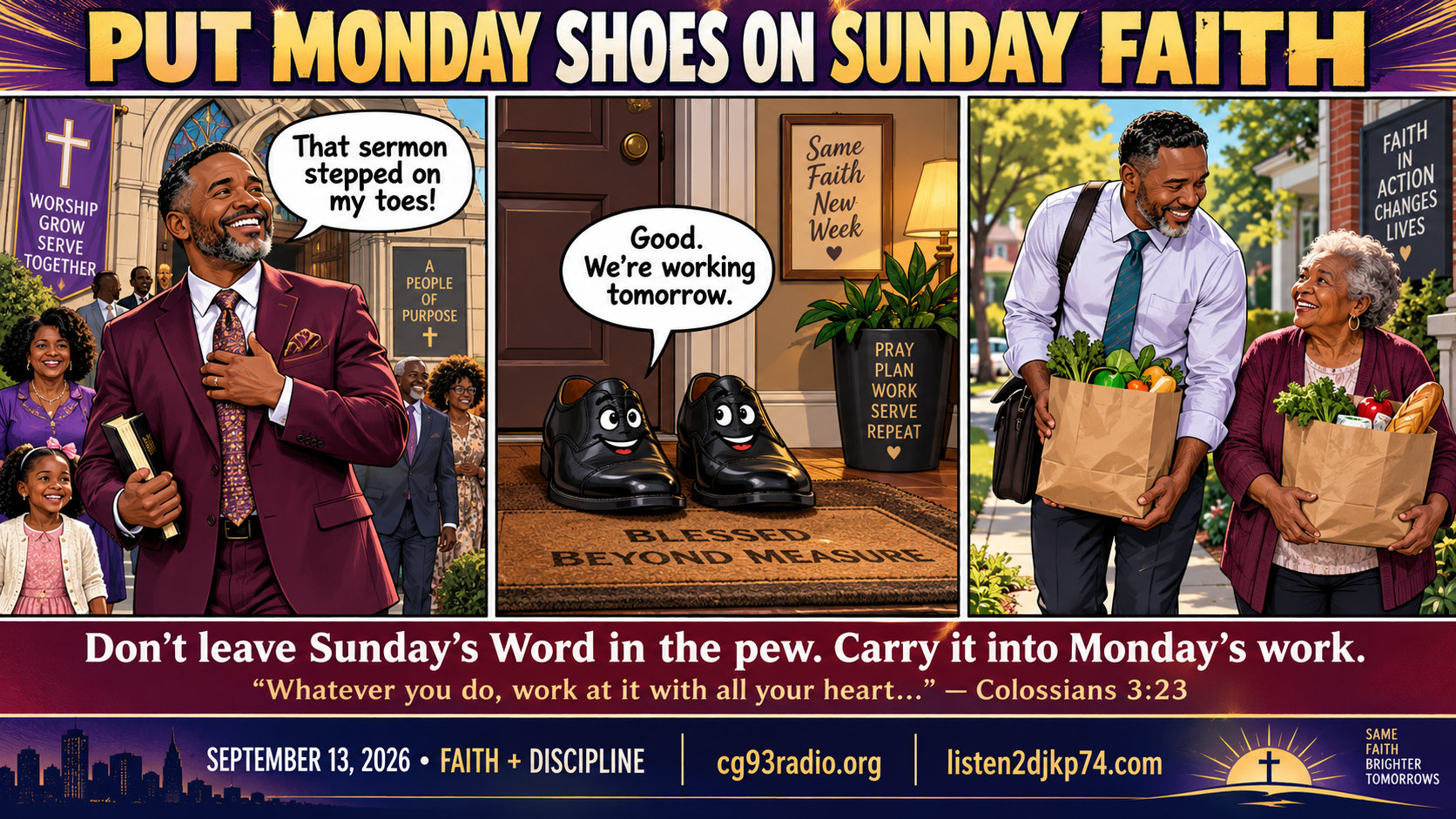 SEPTEMBER 13, 2026Put Monday Shoes on Sunday Faith
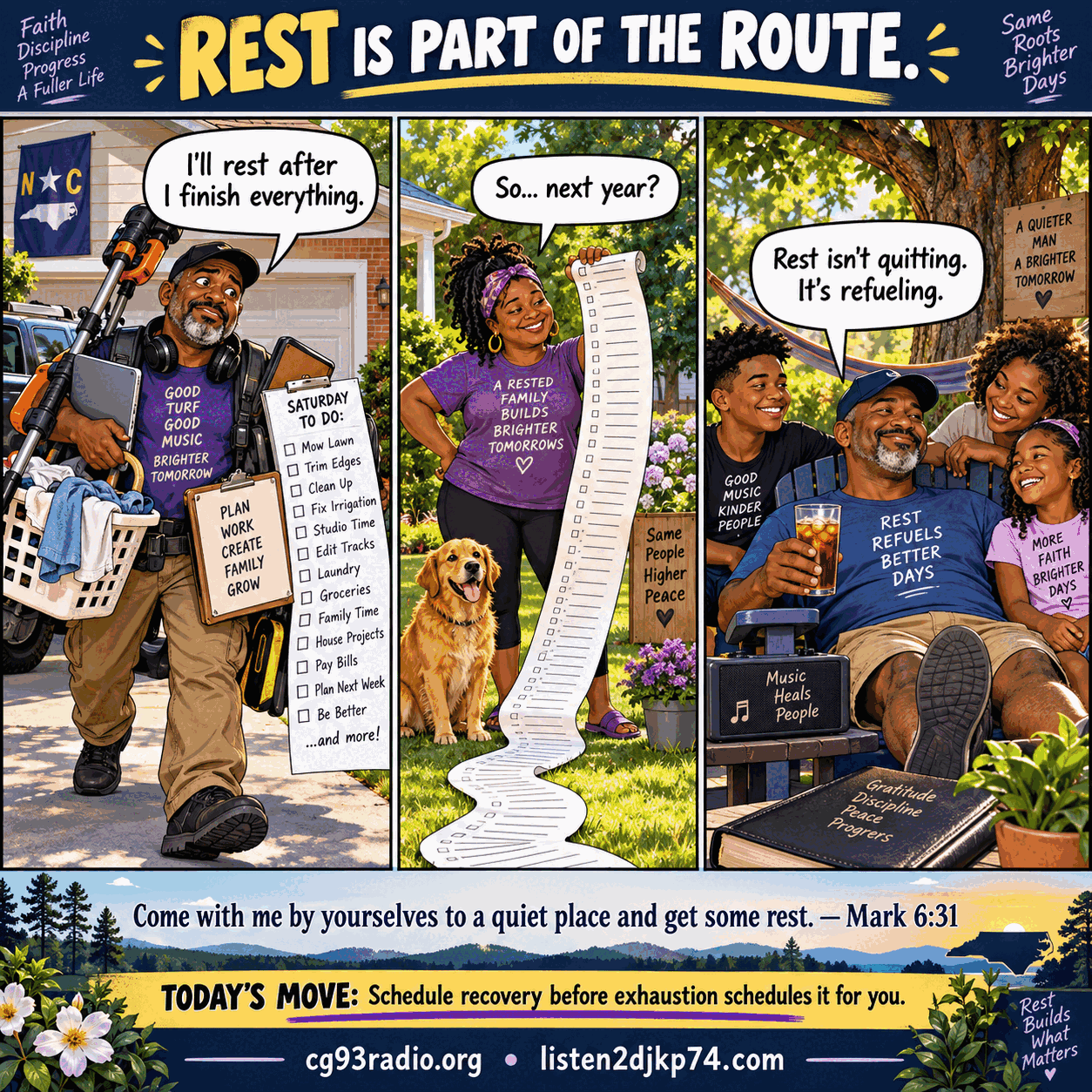 SEPTEMBER 12, 2026Rest Is Part of the Route
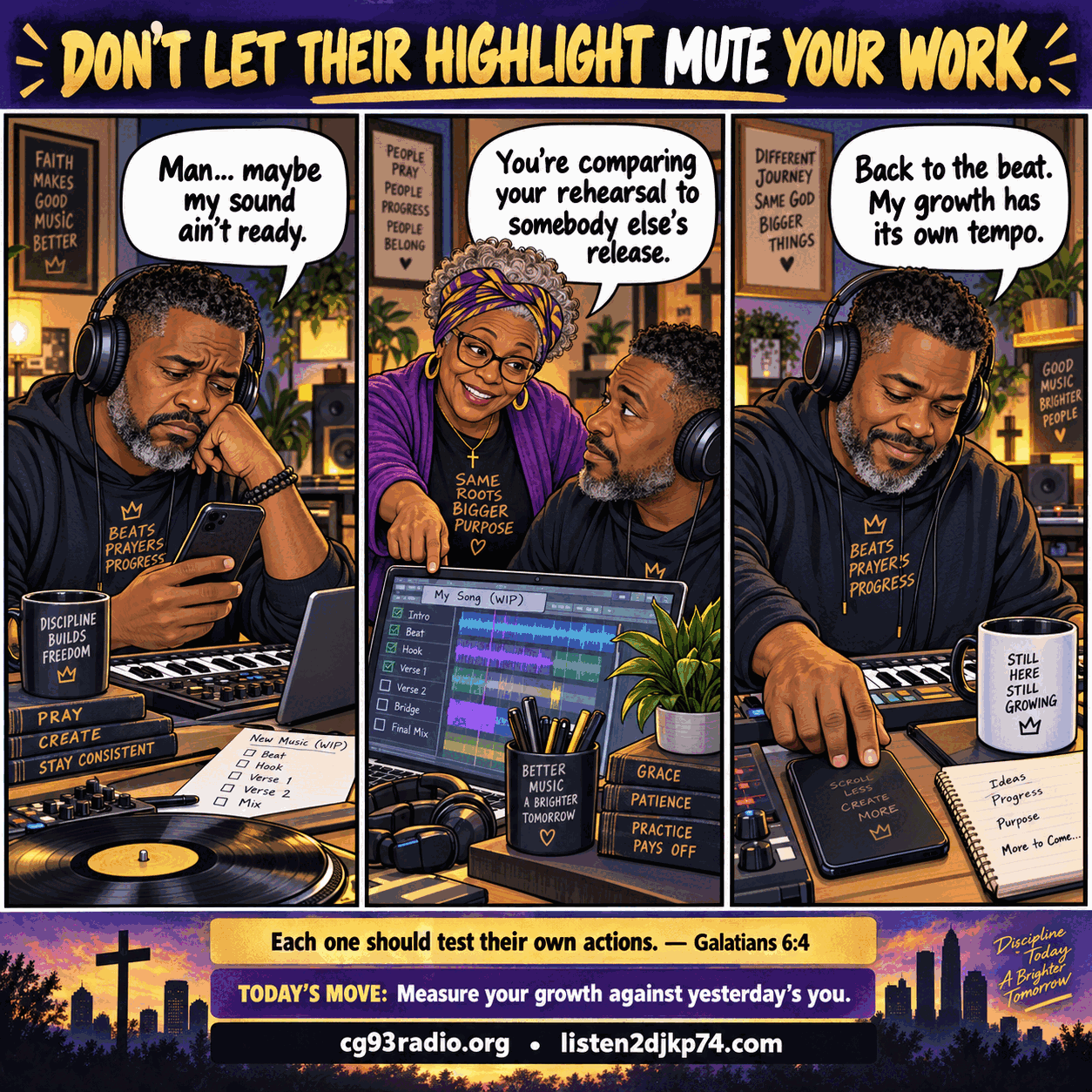 SEPTEMBER 11, 2026Don’t Let Their Highlight Mute Your Work
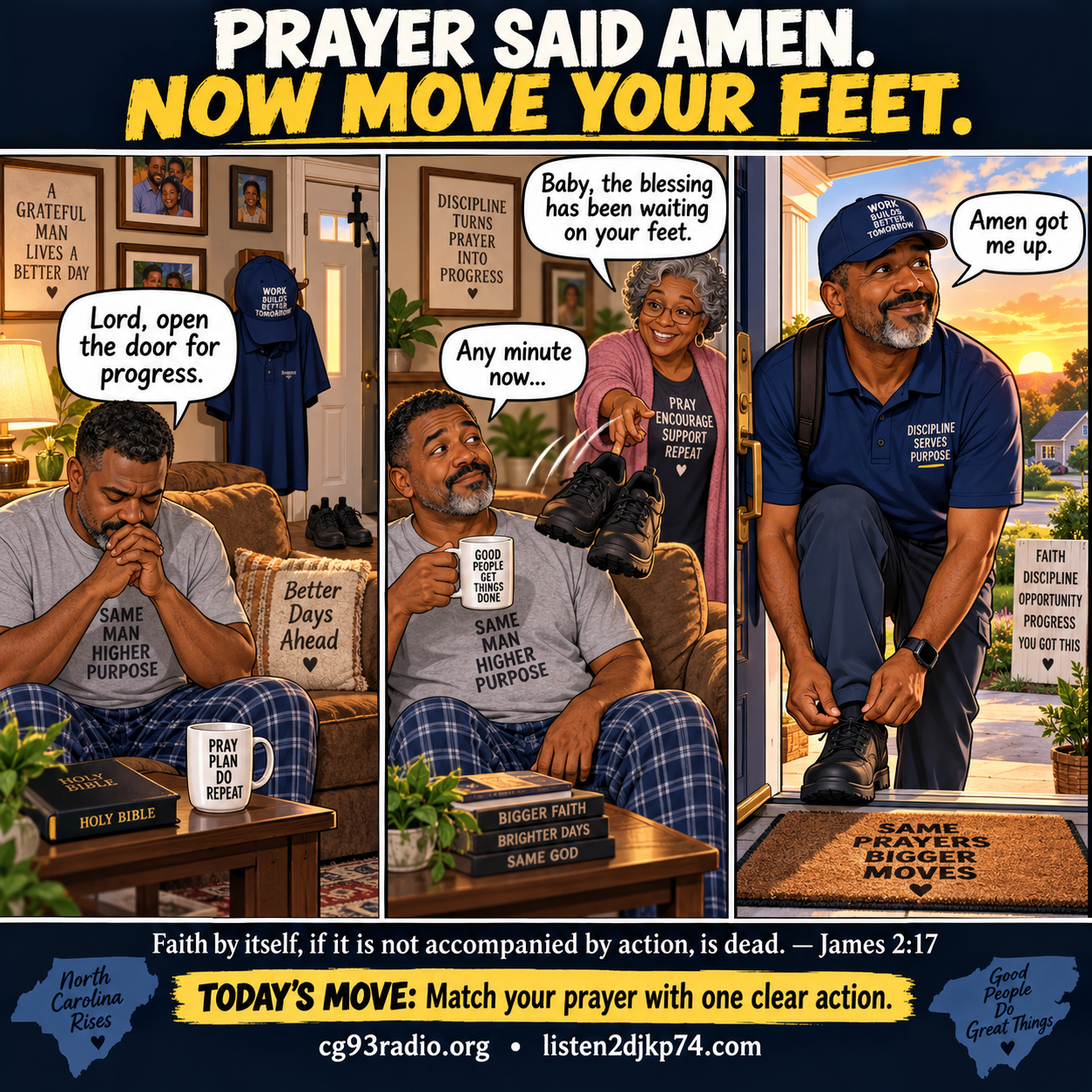 SEPTEMBER 10, 2026Prayer Said Amen. Now Move Your Feet.
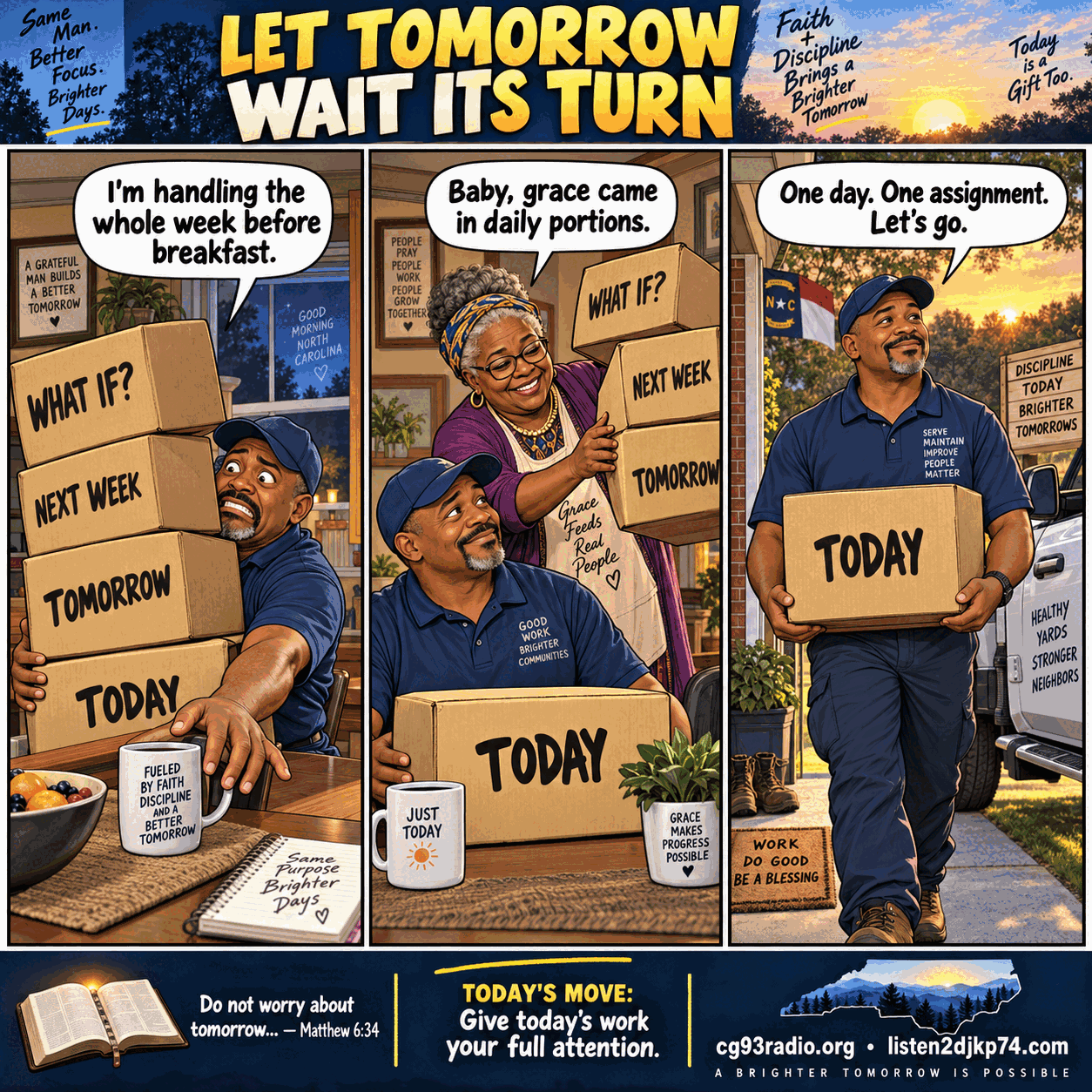 SEPTEMBER 9, 2026Let Tomorrow Wait Its Turn
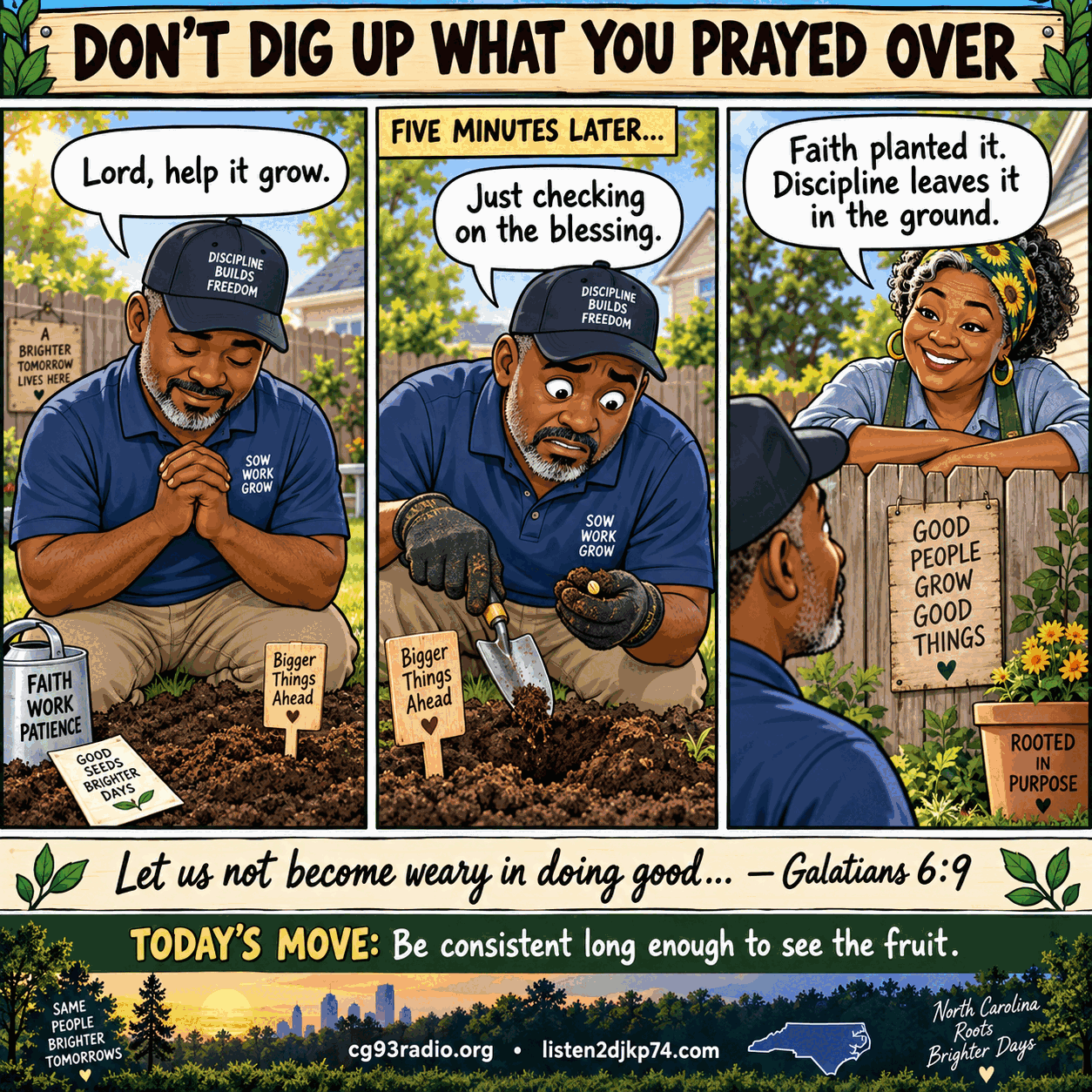 SEPTEMBER 8, 2026Don’t Dig Up What You Prayed Over
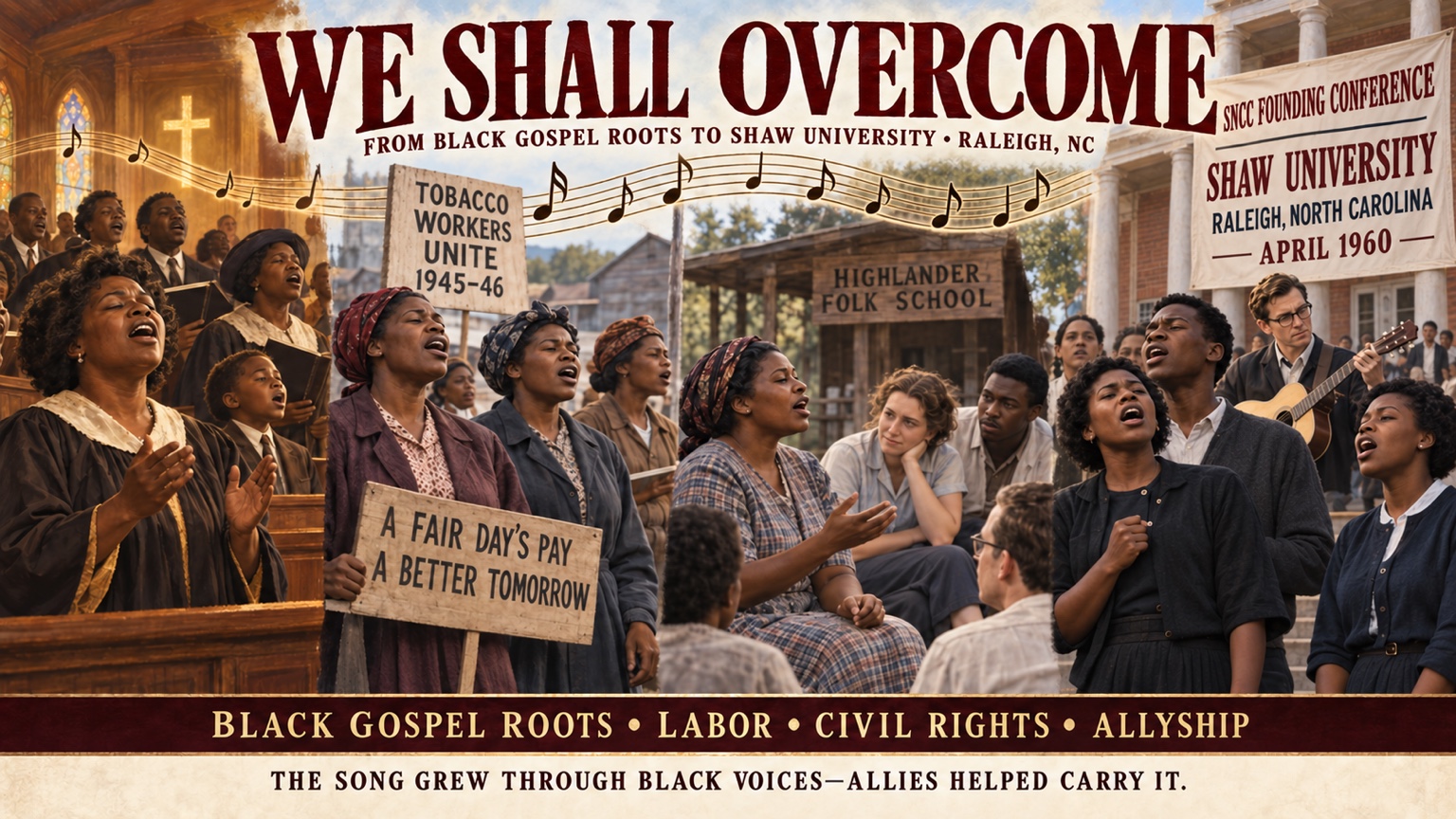 SEPTEMBER 8, 2026We Shall Overcome: Black Gospel Roots, Labor, Civil Rights & Allyship
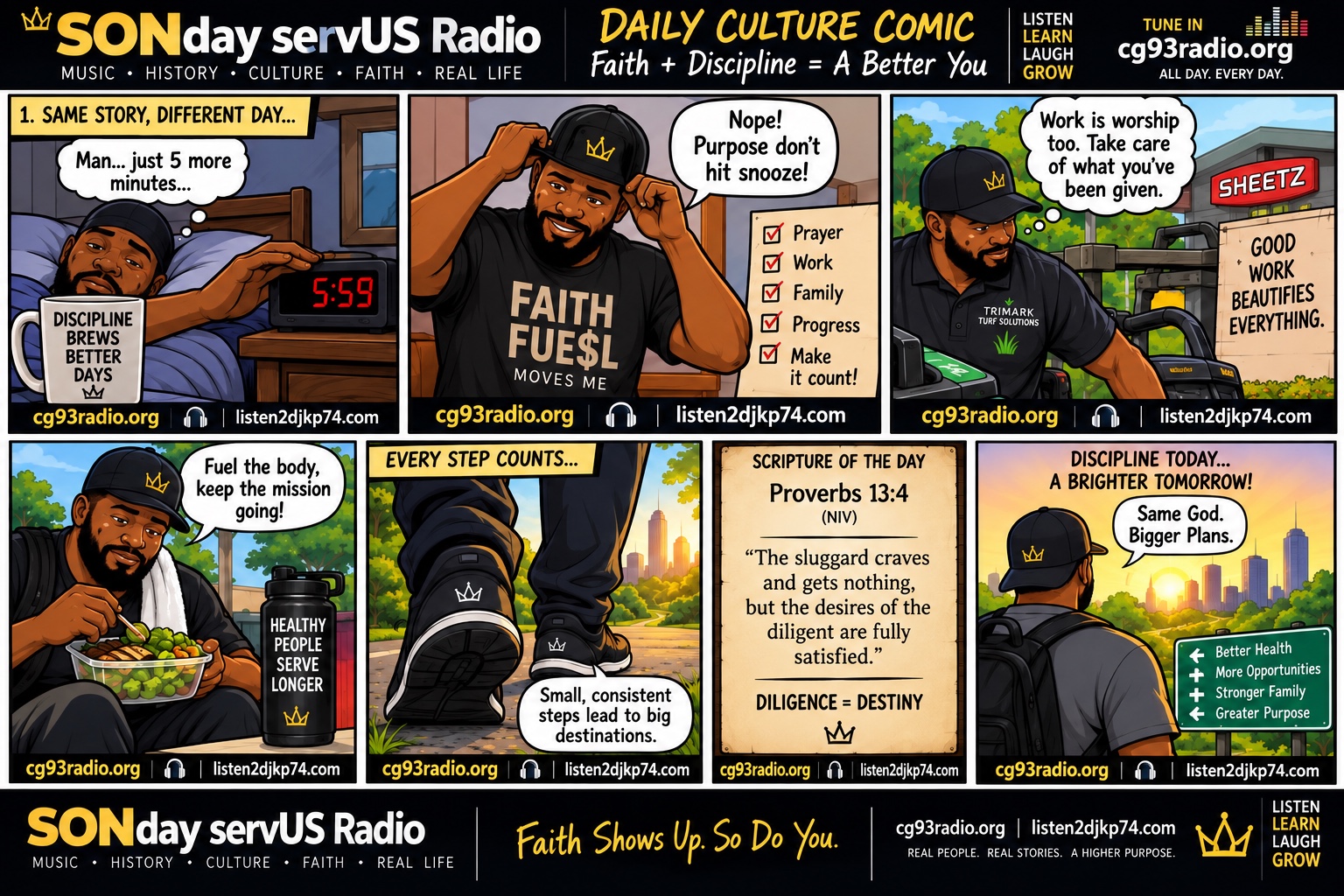 SEPTEMBER 7, 2026Faith + Discipline = A Better You
Before she became Emahoy Tsegué-Maryam Guèbrou, Yewubdar Gebru was a child pianist whose family survived Mussolini’s occupation of Ethiopia as prisoners in Italy. She later trained intensively in Cairo, lost an opportunity to study in London for reasons still unresolved and entered Amba Gishen monastery in 1948. Her compositions joined Ethiopian Orthodox devotion, the memory of war and exile, Ethiopian melodic traditions and European piano technique in a musical language that belonged to no easy category.
Why it matters: Emahoy did not choose between faith and art—she made music a form of service. Record proceeds supported an orphanage and Ethiopian churches; “The Homeless Wanderer” entered national radio life even though she went uncredited. After decades of limited circulation, Éthiopiques 21 introduced her solo piano work globally in 2006. Cornell researchers are now preserving her manuscripts and fragile home tapes, correcting the exotic legend of a mysterious “honky-tonk nun” with the record of a modern Ethiopian composer, pianist and religious intellectual.
Seen, Freed & Building Refuge

Genesis 16 and 21 tell Hagar’s story within the painful household of Abram and Sarai. Hagar was an Egyptian enslaved woman. After Sarai treated her harshly, she fled into the wilderness, where the angel of the LORD found her by a spring and spoke of a future for her son. Hagar named the LORD who spoke to her “Thou God seest me.” Years later, Abraham sent Hagar and Ishmael away with bread and water. When the water was gone in the wilderness of Beersheba, Hagar wept at the prospect of her son’s death. God heard the boy, called to Hagar, renewed the promise concerning Ishmael and opened her eyes to a well. The text does not erase the human decisions that placed mother and child in danger. It testifies that an enslaved, displaced woman was seen, addressed by name and sustained.
“And she called the name of the LORD that spake unto her, Thou God seest me.” — Genesis 16:13, KJV
Bridget “Biddy” Mason was born enslaved in 1818. In 1848, at age thirty, she was compelled to walk roughly 1,700 miles behind a wagon caravan from Mississippi toward the Salt Lake Valley while caring for three daughters, working as a midwife, cooking, herding livestock and making camp. Her enslaver later took the family into California despite the state constitution’s prohibition of slavery. When he attempted to move them to Texas, free Black allies alerted authorities and helped stop the departure. Mason petitioned a Los Angeles court, and on January 22, 1856, she and members of her extended family emerged free. She remained in Los Angeles, worked as a nurse and midwife, purchased property in 1866 and made her home a gathering place. In 1872, Mason and Charles Owens helped organize the city’s First African Methodist Episcopal Church. Her freedom became a base for family security, faith, hospitality and community care.
After a journey imposed on her, Mason used legal courage, skilled work and an open home to help build a freer community.
Hagar and Biddy Mason were enslaved women compelled across harsh landscapes while responsible for their children. Both stories refuse to treat an endangered mother as invisible, and both move from forced displacement toward a future larger than the immediate crisis. Yet the accounts differ in essential ways. Hagar’s is an ancient biblical narrative in which God directly provides water and promise; Mason’s freedom came through information, Black community allies and a California court, followed by years of skilled labor and institution-building. Mason’s life was not a reenactment of Genesis. Together, the stories invite us to notice people pushed to the margins and to turn freedom, resources and faith into places where others can live and belong.
Persisting for Justice
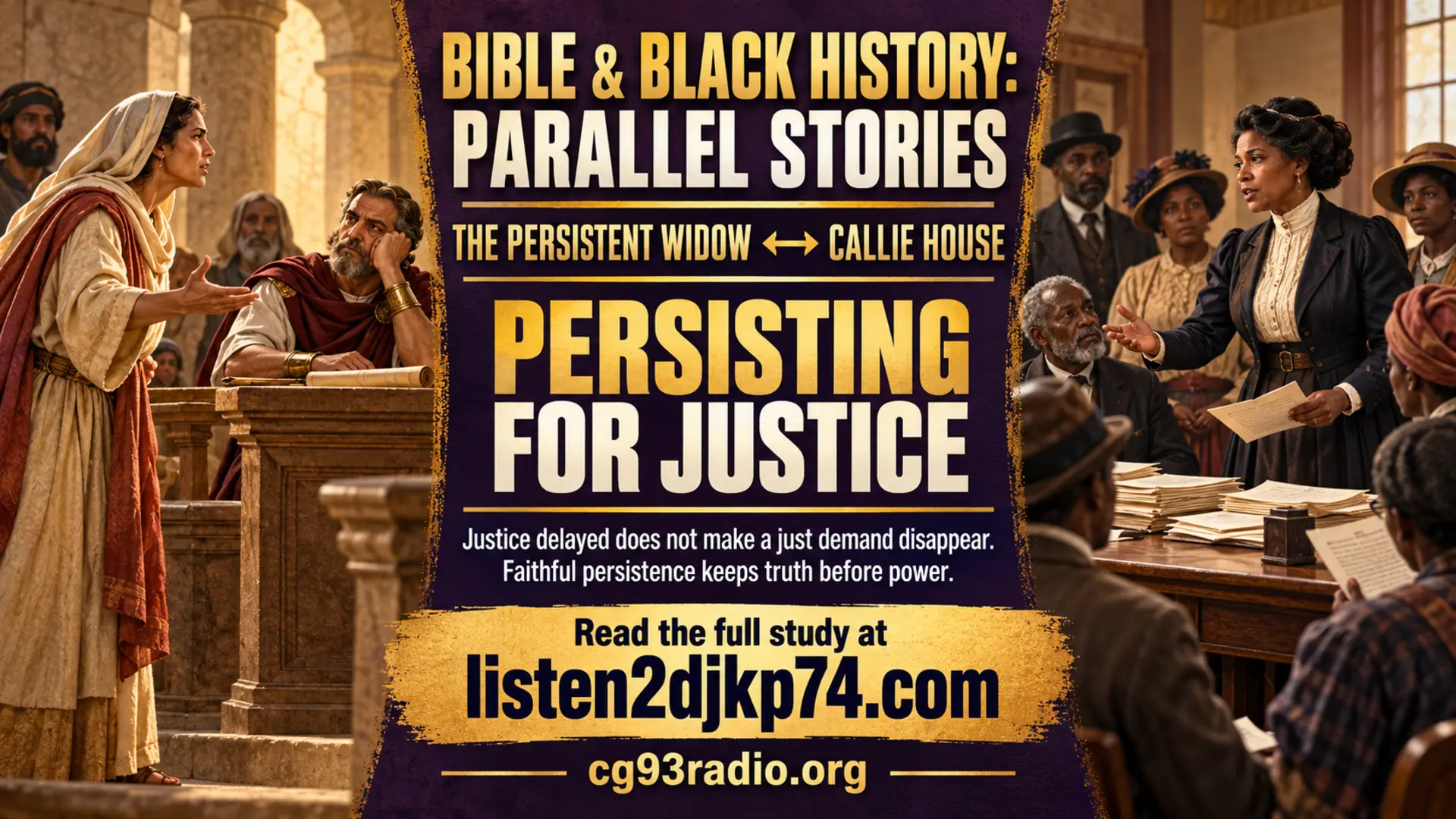
In Luke 18:1–8, Jesus tells of a widow who repeatedly asks an unjust judge to grant justice against her adversary. The judge neither fears God nor respects people, and for a time he refuses. Yet her continual coming moves him to act. Jesus introduces the parable as instruction that his disciples “ought always to pray, and not to faint,” then contrasts the reluctant judge with God, who hears those who cry to him day and night. The judge is not a picture of God’s character, and the account is not a formula guaranteeing that every faithful request will receive our preferred answer on our timetable. It teaches persistent prayer, endurance and confidence that injustice deserves an answer.
“And he spake a parable unto them to this end, that men ought always to pray, and not to faint.” — Luke 18:1, KJV
Callie D. House was born enslaved in Tennessee in 1861 and later worked in Nashville as a seamstress and washerwoman. In November 1898 she was elected assistant secretary of the National Ex-Slave Mutual Relief, Bounty and Pension Association and soon became a national promoter. The highly organized association formed local chapters, held conventions and petitioned Congress for federal pensions—especially for elderly formerly enslaved people—in recognition of years of involuntary labor. It claimed membership in the hundreds of thousands. Federal surveillance intensified as the movement grew: the Bureau of Pensions, Post Office Department and Department of Justice investigated it, and a fraud order blocked the association’s mail in 1899. Congress enacted no pension law. House was convicted of mail fraud in 1917 and sentenced to a year in prison, although the National Archives’ guide states that there is no evidence she profited from the movement. Her campaign kept a claim for repair and material justice in public view even when federal power resisted it.
House’s work joined repeated petition, local organization and national advocacy on behalf of people whose labor had been taken without compensation.
The widow in Jesus’ parable and Callie House’s historical movement are not equivalent stories. One is a brief teaching about persistent prayer; the other was a long, collective campaign for compensation after American slavery. The widow receives the ruling she seeks, while the ex-slave pension movement did not win its proposed federal law. Their genuine connection is sustained moral appeal before authority that would rather turn away. Persistence does not make every strategy flawless or guarantee a quick victory. It refuses, however, to let official indifference define whether a claim is just. This study does not claim that House based her organizing on Luke 18.
Opening a Way to Healing
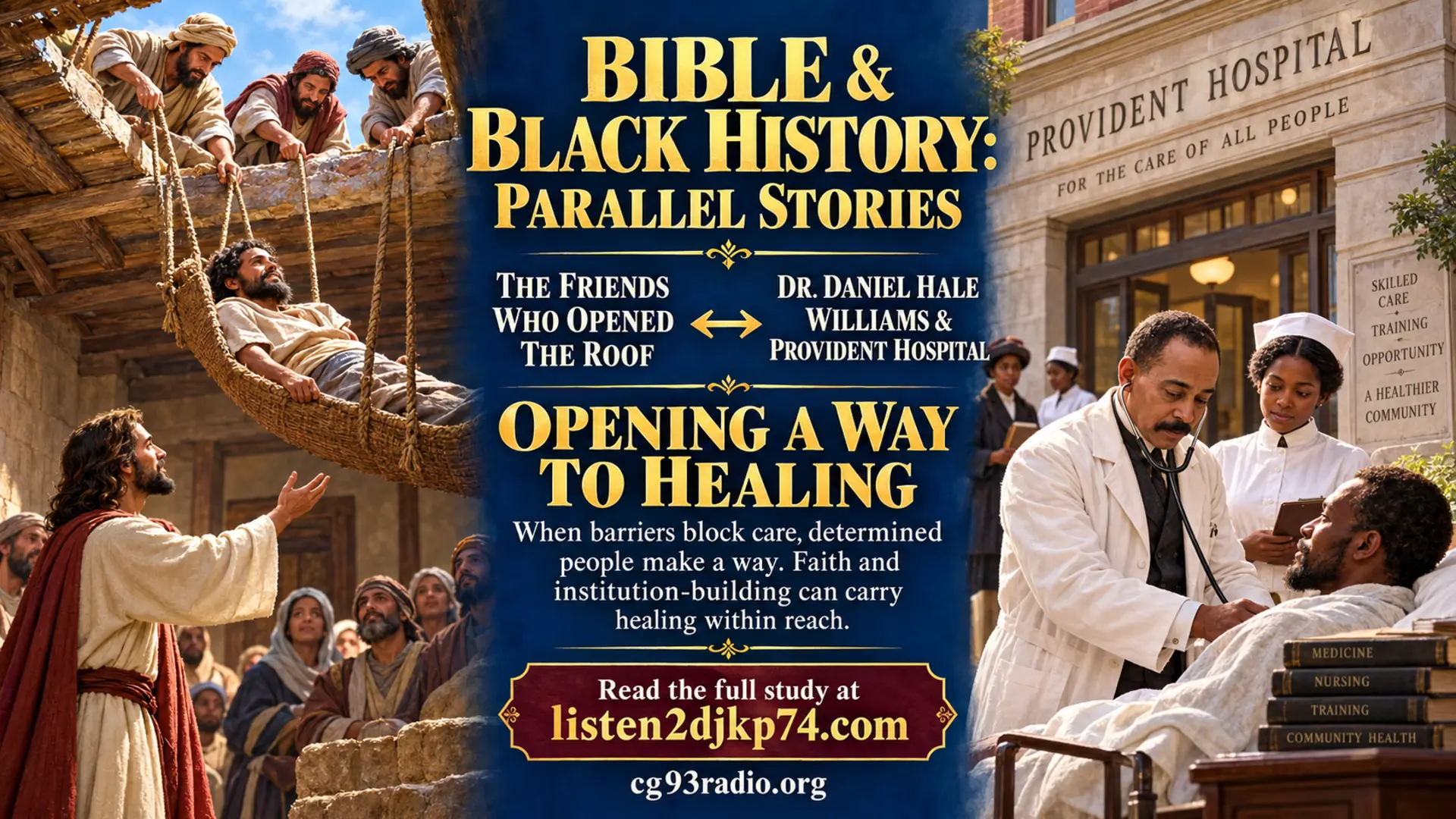
In Mark 2:1–12, Jesus was teaching in a Capernaum house packed so tightly that there was no room even near the door. Four people arrived carrying a man who could not walk. When the crowd blocked their way, they climbed to the roof, opened a section above Jesus and carefully lowered the man on his mat. Jesus “saw their faith,” first spoke forgiveness and then told the man to rise, take up his bed and go home. The friends could not perform the healing themselves, but they could carry, climb, open and lower. Their faith became practical teamwork that placed a neighbor within reach of help.
“When Jesus saw their faith, he said unto the sick of the palsy, Son, thy sins be forgiven thee.” — Mark 2:5, KJV
In late-nineteenth-century Chicago, racial discrimination restricted where Black patients could receive care and where Black doctors and nurses could train or serve. After aspiring nurse Emma Reynolds was refused admission to nursing schools because she was Black, Dr. Daniel Hale Williams organized support for a new institution. The Provident Hospital and Training School Association was incorporated on January 23, 1891. Provident became the nation’s first Black-owned and operated hospital and nurse-training school while maintaining an interracial staff and serving patients across racial lines. In 1893, Williams operated on James Cornish after a stab wound near the heart, repairing the damaged pericardium; Cornish recovered. The lasting achievement was larger than one celebrated operation: Provident created a durable doorway into skilled care, nursing education and hospital practice.
Provident answered exclusion by building access—an institution where Black medical ability could be trained, trusted and put to work.
The crowded doorway in Capernaum and the racial barriers surrounding American medicine were not the same kind of obstacle. The friends made an immediate opening for one man; Williams, Reynolds and their supporters helped create a lasting institution for many. Their genuine connection is determined compassion. In both stories, people refused to confuse a blocked route with the end of responsibility. They used what they could control—strength, coordination, professional skill, organization and community support—to bring healing within reach. This is not a claim that Williams modeled Provident on Mark 2. It is a lesson in turning concern into access.
Courage, Strategy & the Road to Freedom

In Joshua 2, two Israelite messengers entered Jericho and lodged at Rahab’s house. When the king demanded that she surrender them, Rahab hid the men beneath stalks of flax on her roof and sent the search party toward the Jordan. She then spoke with the messengers about Israel’s God and negotiated a promise of safety for her parents, siblings and everyone gathered in her home. A scarlet cord in her window would identify the household, and she helped the men escape down the city wall. Joshua 6:22–25 records that Rahab and her family were brought out safely when Jericho fell. The account presents her not as a passive bystander, but as someone who read the danger, acted decisively and sought a future for others as well as herself.
“Now therefore, I pray you, swear unto me by the LORD, since I have shewed you kindness, that ye will also shew kindness unto my father’s house.” — Joshua 2:12, KJV
William and Ellen Craft were an enslaved married couple in Macon, Georgia. On December 21, 1848, they began a daring self-emancipation journey. Ellen, who had light skin, disguised herself as a sickly young white male enslaver traveling for medical care; William traveled openly as the man’s enslaved attendant. Her arm was placed in a sling, helping conceal that she could not sign travel documents, and illness discouraged close conversation. Moving by train and steamship through the slave states, they reached Philadelphia after four days and later settled in Boston. The Fugitive Slave Law of 1850 again put them in danger, so with help from Boston’s abolitionist community they left for England. There they continued antislavery advocacy and published their firsthand narrative in 1860. Their escape was their own intelligent, cooperative plan—not a rescue designed for them by others.
The Crafts used the racial, gender and class expectations of slaveholding society against the system that claimed ownership of them.
Rahab and the Crafts faced authorities prepared to use surveillance and force against people seeking safety. In both stories, courage worked through close observation, concealment, timing, trust and a carefully chosen route. Yet the accounts are not interchangeable. Rahab acted within an ancient conquest narrative and bargained with the messengers for her household’s protection; William and Ellen Craft were resisting American chattel slavery and devised their own journey to freedom. The parallel is not that every disguise or misdirection is automatically right. It is that moral courage can require wise strategy when unjust power makes the obvious path deadly. This study does not claim that the Crafts based their escape on Rahab’s story.
Courage That Tests the Law

In Acts 22:22–29, a Jerusalem crowd demanded Paul’s death after he described his calling to the Gentiles. The Roman commander ordered Paul taken into the fortress and examined by scourging. As soldiers bound him, Paul asked the centurion whether it was lawful to scourge an uncondemned Roman citizen. The question changed the situation immediately. The centurion alerted the commander, who confirmed Paul’s citizenship and became afraid because he had bound him without due process. Paul did not pretend the system was just; he used the status it recognized to interrupt state violence and make the authorities answer to their own law.
“Is it lawful for you to scourge a man that is a Roman, and uncondemned?” — Acts 22:25, KJV
Louisiana’s 1890 Separate Car Act required racially separated railway accommodations. The Citizens’ Committee of New Orleans formed to challenge the law under the Fourteenth Amendment, and Homer Plessy volunteered for its carefully planned test. On June 7, 1892, he bought a first-class ticket, sat in a car designated for white passengers and refused to move when the conductor classified him as Black. A detective hired in advance arrested him so the committee could bring the law before the courts. On May 18, 1896, the U.S. Supreme Court ruled against Plessy and upheld state-mandated segregation under the destructive “separate but equal” doctrine. Plessy’s action did not win immediate protection, but it made the constitutional conflict unmistakable and left a record later civil-rights advocates would confront.
Plessy acted with the Citizens’ Committee: this was disciplined collective strategy, not a spontaneous railway dispute.
Paul and Plessy each confronted coercive authority by asking whether the law would honor the citizenship it claimed to recognize. Their circumstances, legal systems and outcomes were profoundly different. Paul’s Roman citizenship stopped the threatened scourging; Plessy’s American citizenship did not prevent arrest, and the Supreme Court used his case to legitimize segregation for decades. The genuine parallel is therefore not equal legal success. It is the courage to turn a personal moment of danger into a public test of power. Their stories invite us to ask both how law can restrain injustice and how law itself can become an instrument of injustice. This comparison does not suggest that Plessy or the Citizens’ Committee drew their strategy from Acts.
Refusing to Leave Someone Behind
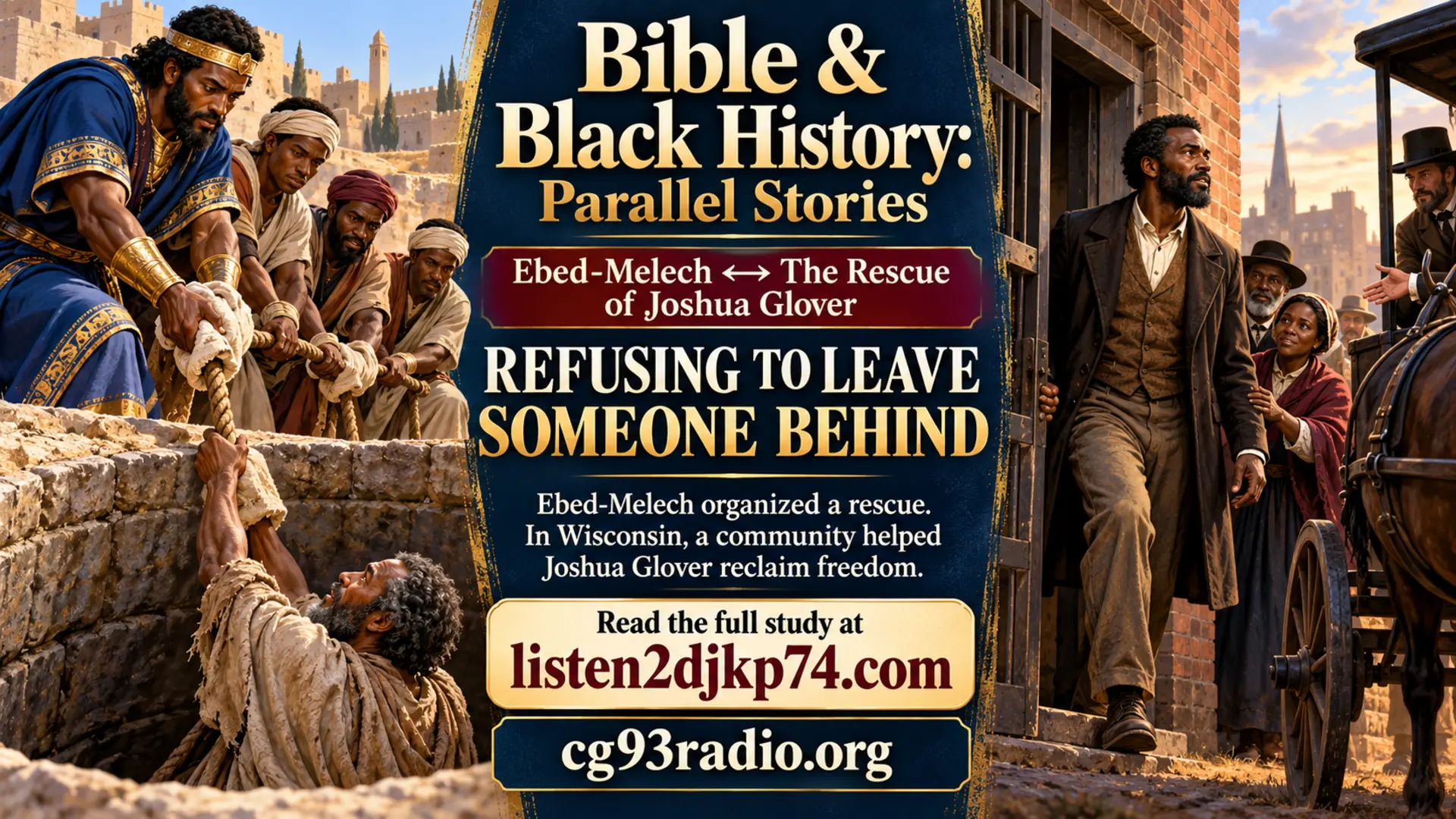
In Jeremiah 38:1–13, officials accused Jeremiah of weakening the resolve of Jerusalem’s defenders. With King Zedekiah’s permission, they lowered the prophet into a cistern where there was no water, only mud, and he began to sink. Ebed-Melech, a Cushite serving in the royal household, heard what had happened. He went to the king, called the officials’ action evil and warned that Jeremiah would die. Zedekiah authorized him to take men and bring Jeremiah out. Ebed-Melech gathered worn clothing and rags, lowered them with ropes and instructed Jeremiah to pad his armpits before the men pulled him up. They rescued him from the cistern, though he remained in the court of the guard. The detail about padding matters: the intervention protected a vulnerable person’s body as well as his life.
“So they drew up Jeremiah with cords, and took him up out of the dungeon: and Jeremiah remained in the court of the prison.” — Jeremiah 38:13, KJV
Joshua Glover escaped slavery in Missouri in 1852 and built a working life in Racine, Wisconsin. His freedom remained threatened by the federal Fugitive Slave Act of 1850. In March 1854, his former enslaver and slave catchers seized him near Racine and carried him to a Milwaukee jail. On March 11, a large crowd assembled in opposition to his captivity, with abolitionists from Racine joining those in Milwaukee. After efforts to secure his release through legal channels failed, members of the crowd broke through the jail door and brought him out. Supporters then helped move him through a network of safe houses and onward to Canada. He settled in Etobicoke, Ontario, where he worked and made a new life. The rescue was a dramatic moment, but continued shelter, transport and cooperation were essential to keeping him beyond the reach of the people claiming ownership of him.
Glover was not simply the object of someone else’s heroism: his own escape and determination to live free stand at the center of this history.
Ebed-Melech’s intervention received royal authorization; Glover’s rescuers defied a federal law that protected enslavement. Jeremiah was a detained prophet in besieged Jerusalem, while Glover was a Black freedom seeker threatened by a slaveholding system. These circumstances and methods are not interchangeable. Their genuine connection is the refusal to let an endangered person disappear from concern. In both accounts, advocacy became coordinated action: people gathered help, used available resources and physically moved someone out of danger. Jeremiah’s padded ropes and Glover’s continuing safe-house support also show that rescue requires care beyond a dramatic first step. This is a reflection on dignity, courage and sustained responsibility—not a claim that the Wisconsin rescuers based their actions on this biblical passage.
Overlooked Voices, Life-Changing Knowledge

In 2 Kings 5:1–14, Naaman was a respected Aramean military commander with a serious skin condition. An Israelite girl, taken captive in a raid and serving his wife, said that the prophet in Samaria could help him. The narrative does not give her name, but her knowledge set the journey in motion. Naaman first approached through royal channels; eventually he reached Elisha, who sent instructions to wash seven times in the Jordan. Naaman was angry at the unexpected simplicity of the instruction. His servants urged him to reconsider, and he followed it; the account says his flesh was restored. Both the girl and the later servants contributed words that the commander needed to hear. The girl did not perform the healing, and her helpfulness does not justify her captivity. The Hebrew term often translated “leprosy” covers various skin conditions; the text does not establish a diagnosis of modern Hansen’s disease.
“Would God my lord were with the prophet that is in Samaria! for he would recover him of his leprosy.” — 2 Kings 5:3, KJV
Alice Augusta Ball earned a master’s degree in chemistry at the College of Hawaiʻi in 1915, becoming the institution’s first woman and first African American master’s graduate. She also taught chemistry there. Working with public-health researchers in Honolulu, Ball addressed a difficult problem: chaulmoogra oil had long been used against Hansen’s disease, but it was hard to administer effectively. She developed a method for converting its fatty acids into ethyl esters suitable for injection. This advance became an important treatment before the arrival of sulfone drugs in the 1940s; it was not the same as a modern antibiotic cure. Ball died on December 31, 1916, aged 24. College president Arthur Dean continued the work without properly acknowledging her contribution. In 1922, physician Harry T. Hollmann explicitly credited her process. Recovering that record helped restore recognition of the “Ball Method.”
The American Chemical Society designated the Ball Method a National Historic Chemical Landmark in Honolulu on February 26, 2026—honoring both the research and the importance of correcting its attribution.
A captive child directing someone to a prophet and a trained Black chemist developing a treatment are not equivalent roles. Naaman’s biblical healing is presented as God’s work through prophetic instruction; Ball’s achievement was scientific research. Nor should the two accounts be joined by assuming they concern the same disease. Their genuine thematic connection is that people outside the center of power can contribute indispensable knowledge. The girl’s words mattered despite her subordinate position; Ball’s work mattered even when its authorship was obscured. The lesson is not that suffering or exclusion was necessary for their contributions. It is that we should listen without ranking a person’s worth by status, credit work accurately and resist the systems that erase people while benefiting from what they know.
Making Room to Learn

In 2 Kings 6:1–7, the company of prophets told Elisha that their shared place was too small. They proposed going to the Jordan, where each person could gather a beam so they could build a larger place. Elisha agreed and, at their request, went with them. While they were cutting timber, one man’s iron axe head fell into the water. He cried out because the tool was borrowed. Elisha asked where it had fallen, cut a stick and threw it there; the biblical account says the iron floated. Elisha then told the man to retrieve it. The story presents a miracle within an ordinary communal project: people name a limitation, take initiative, contribute labor and seek help when something goes wrong. It does not describe a modern school, but it does concern the shared space of a prophetic community under Elisha’s guidance.
“Let us go, we pray thee, unto Jordan, and take thence every man a beam, and let us make us a place there, where we may dwell.” — 2 Kings 6:2, KJV
On October 3, 1904, Mary McLeod Bethune opened a school for Black girls in Daytona Beach, Florida. It began in a rented building with five girls; her young son also attended. This was the segregated South, where Black children faced deeply unequal access to education. Bethune’s beginning was practical rather than grand: she salvaged furnishings and supplies and taught both academic subjects and skills intended to help students earn a living. As enrollment grew, she raised money through food sales, concerts and direct appeals, drawing support from the Black community and from donors. Her work was not a solitary achievement, even though her leadership was central. In 1923, the school merged with Cookman Institute, a Methodist institution for men. That institutional partnership became part of the foundation of today’s Bethune-Cookman University.
Bethune’s legacy joins a teacher’s conviction with the sustained labor, funding and cooperation needed to keep doors open for learners.
The prophetic community’s need for more space was not the same as Black girls’ exclusion from equal educational opportunity under segregation. Nor does Bethune’s documented work provide a historical counterpart to the floating axe head. The genuine parallel is practical, shared responsibility for a learning community: recognize the need, organize available resources and build capacity together. Elisha’s companions did not simply ask for a larger place; each offered a beam. Bethune did not wait for ideal conditions; she taught, gathered support and built an institution over time. As a reflection—not a claim that Bethune modeled her school on this passage—the pairing asks what we can contribute so that others have room to grow.
Courage That Cannot Stay Silent
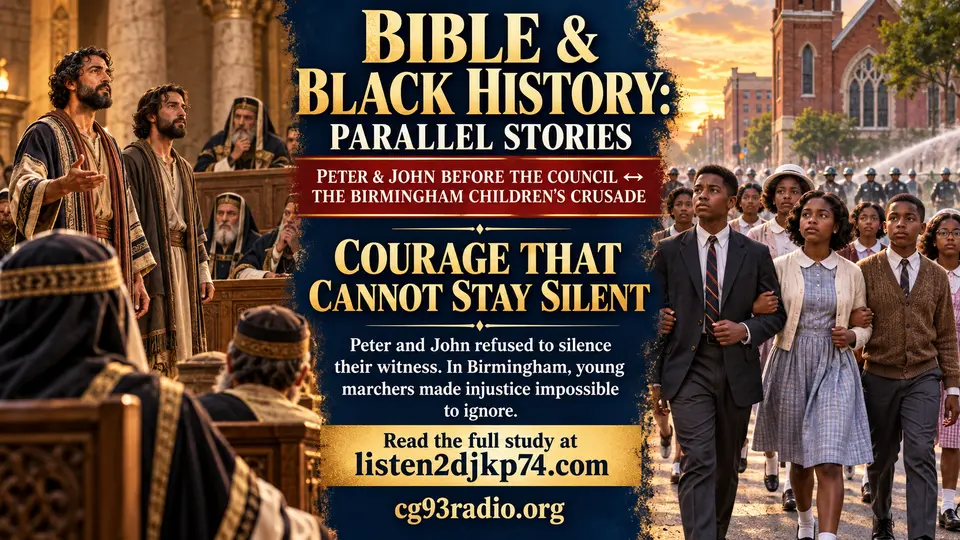
In Acts 4:1–22, religious authorities arrested Peter and John after they taught publicly about Jesus and a man who had been unable to walk was healed. The next day, rulers and teachers questioned the apostles about the power or name behind their action. Peter, filled with the Holy Spirit, testified about Jesus Christ. The council recognized the apostles’ courage, saw the healed man standing with them and could not deny what had happened. Yet it ordered Peter and John to stop speaking or teaching in Jesus’ name. They answered that the council must judge whether obedience to human authority could come before obedience to God: they could not remain silent about what they had seen and heard.
“As for us, we cannot help speaking about what we have seen and heard.” — Acts 4:20
In spring 1963, the Birmingham Campaign challenged a city where segregation shaped public facilities, employment and daily life. When the campaign lost momentum, Southern Christian Leadership Conference organizer James Bevel proposed bringing young people into the nonviolent demonstrations—a strategy that was powerful and controversial. On May 2, more than 1,000 African American students attempted to march from the area of Sixteenth Street Baptist Church toward downtown; hundreds were arrested. The next day and in the days that followed, Public Safety Commissioner Eugene “Bull” Connor ordered police and firefighters to stop the demonstrators. News images showed young marchers struck by high-pressure water, threatened by police dogs and taken to jail. Their disciplined witness intensified national and international pressure. On May 10, local leaders announced a compromise that included releasing protesters, beginning desegregation of public accommodations and opening some jobs to Black workers.
The young marchers did not create the campaign alone, but their participation made Birmingham’s system of segregation—and the force used to defend it—harder for the public to ignore.
Peter and John were adult apostles bearing witness to Jesus before a religious council; Birmingham’s young marchers were Black children and teenagers confronting civic segregation through organized nonviolent protest. Their missions and risks are not the same. The genuine parallel is courageous public witness when authority prefers silence. Neither account presents courage as loudness for its own sake: words are joined to visible evidence—a healed man standing before the council and peaceful marchers revealing the violence required to preserve segregation. The comparison should not romanticize children being placed in danger. It calls adults to protect young people, take their moral clarity seriously and refuse systems that punish truth-telling.
In Mark 10:46–52, Bartimaeus, a blind man who begged beside the road outside Jericho, heard that Jesus was passing. He cried out for mercy. Many people rebuked him and told him to be quiet, but he called even louder. Jesus stopped and told the crowd to call him. Bartimaeus threw aside his cloak, came to Jesus and answered Jesus’ direct question: he wanted to see. Jesus told him that his faith had healed him; immediately Bartimaeus received his sight and followed Jesus along the road. The account centers a person others tried to hush and preserves his own request rather than speaking for him.
Key scripture: “‘What do you want me to do for you?’ Jesus asked him. The blind man said, ‘Rabbi, I want to see.’” — Mark 10:51
Patricia Bath was an ophthalmologist, laser scientist and inventor who created the discipline she called community ophthalmology—bringing public-health and community-medicine approaches into eye care for underserved populations. In 1976, she co-founded the American Institute for the Prevention of Blindness, which advanced the principle that eyesight is a basic human right. Bath conceived the Laserphaco Probe in 1981 as a new laser-based instrument and method for removing cataracts. On May 17, 1988, she received U.S. Patent No. 4,744,360, becoming the first African American woman to receive a U.S. patent for a medical device. Her work joined technical innovation to a larger question: who gets seen, treated and included in the benefits of medicine?
The parallel: Mark’s Gospel presents Bartimaeus’ restored sight as a miraculous act of Jesus; Bath’s achievements came through medical training, research, engineering and patient care. They are not equivalent acts. Their genuine connection is attention joined to restoration. Jesus heard the man whom the crowd tried to silence, stopped and asked what he wanted. Bath saw that preventable blindness and unequal access to eye care demanded both invention and community action. Together, the stories challenge us to listen before assuming, to recognize people whom systems overlook and to use faith, knowledge and skill in service of human dignity.
In Mark 4:35–41, Jesus and his disciples crossed the Sea of Galilee after a day of teaching. A sudden, violent squall drove waves into the boat until it began to fill, while Jesus slept in the stern. The frightened disciples woke him and asked whether he cared that they were perishing. Jesus rose, rebuked the wind and ordered the waves to be still. The storm gave way to complete calm. He then asked why they were afraid and whether they still had faith. The account does not deny the danger or shame the disciples for calling out; it reveals Christ’s presence and authority in the crisis.
Key scripture: “He got up, rebuked the wind and said to the waves, ‘Quiet! Be still!’ Then the wind died down and it was completely calm.” — Mark 4:39
In 1880, Richard Etheridge became the first African American keeper of a United States Life-Saving Service station. When white surfmen refused to serve under him, African American surfmen formed the first and only all-Black crew in that service at Pea Island on North Carolina’s Outer Banks. Etheridge drilled them rigorously. On October 11, 1896, the schooner E.S. Newman grounded during a hurricane about two miles south of the station. The seas made the crew’s boat and line-throwing equipment unusable, so Etheridge devised another plan: pairs of surfmen, tied to a shore line, fought through the breakers and returned again and again. After ten trips, they had rescued all nine people aboard. In 1996, the Coast Guard posthumously awarded Etheridge and his crew the Gold Lifesaving Medal for the rescue.
The parallel: Mark’s Gospel proclaims Jesus’ divine authority over wind and sea; the Pea Island rescue records trained human beings working bravely within a storm they could not command. These are not equivalent acts. Their genuine connection is steady leadership when frightened lives are at risk. Jesus’ presence turns panic toward faith and safety. Etheridge’s preparation enabled his crew to adapt when ordinary equipment failed, and their repeated action carried nine people through the surf. Together, the accounts ask whether our faith produces calm attention, disciplined preparation and courageous care for others when conditions become dangerous.
In Acts 8:26–40, an angel directed Philip toward the desert road from Jerusalem to Gaza. There he met an Ethiopian court official who managed the treasury of the Kandake and was returning from worship in Jerusalem. The official was reading aloud from Isaiah but needed help understanding the passage. Philip first listened to the question, then began with that Scripture and explained the good news about Jesus. When they came to water, the official asked to be baptized. Afterward he continued on his way rejoicing. The account honors both a learner humble enough to ask and a guide willing to meet him on the road.
Key scripture: “How can I,” he said, “unless someone explains it to me?” — Acts 8:31
Frederick Douglass was born enslaved in Maryland around 1818. After he was sent to Baltimore, Sophia Auld began teaching him the alphabet, but her husband stopped the lessons because literacy threatened the control slavery required. Douglass understood the lesson hidden inside that prohibition: reading could become a path toward freedom. He continued learning by exchanging bread for lessons with white neighborhood boys and practiced writing from letters marked on shipyard timber. He later taught other enslaved people in a Sabbath school. After escaping slavery in 1838, Douglass became an abolitionist speaker, published his first autobiography in 1845 and founded The North Star newspaper in 1847—turning literacy into public witness.
The parallel: The Ethiopian official was a powerful first-century court officer seeking spiritual understanding; Douglass was an enslaved Black child denied basic literacy in nineteenth-century America. Their circumstances are not equivalent. Their genuine connection is the transforming power of learning when a person reaches for understanding and knowledge is shared. Philip did not use the official’s question to diminish him; he joined him, explained the text and respected his agency. Douglass pieced together lessons that a slaveholding system tried to prevent, then shared knowledge through teaching, speeches, books and newspapers. Both accounts invite us to treat access to words, wise guidance and the ability to speak for oneself as matters of human dignity.
In Exodus 5, Moses and Aaron asked Pharaoh to let the Israelites worship God. Pharaoh answered by making their forced labor even harsher: the people would receive no straw for brickmaking, yet they still had to produce the same number of bricks. They scattered across Egypt searching for stubble while the overseers drove them to meet an impossible quota; Israelite foremen were beaten when production fell. The foremen protested the injustice to Pharaoh, and Moses brought the people’s anguish before God. This episode belongs within the larger Exodus account in which God says that he has seen the people’s misery, heard their cry and knows their suffering.
Key scripture: “I have indeed seen the misery of my people in Egypt. I have heard them crying out because of their slave drivers.” — Exodus 3:7
Pullman sleeping-car porters created comfort and safety for rail passengers, but the prestigious-looking job carried degrading conditions. The Smithsonian records that porters could work about 400 hours a month; low pay, dependence on tips and racial discrimination helped spur organizing. On August 25, 1925, porters formed the Brotherhood of Sleeping Car Porters and chose labor advocate A. Philip Randolph to lead it. The Pullman Company resisted, and organizing could put a porter’s job at risk. After years of disciplined organizing, the Brotherhood received an American Federation of Labor charter in 1935. On August 25, 1937, it signed a landmark collective-bargaining agreement with Pullman that brought higher pay, shorter hours, greater job security and grievance protections.
The parallel: Israel’s brickmakers were an enslaved people under an ancient empire; Pullman porters were wage earners organizing within the Jim Crow United States. Their conditions and outcomes are not equivalent. The genuine connection is narrower: powerful systems demanded exhausting labor while denying workers the resources, dignity and voice they deserved. Exodus shows that God sees such suffering and that Moses brings it before power. The Brotherhood shows how workers, families and organizers built collective strength over twelve years to change concrete conditions. Together, the stories call us to notice impossible demands, listen to workers themselves and join patient action with moral courage.
In Acts 9:26–28, Saul came to Jerusalem after his conversion, but the disciples were afraid of the man who had persecuted believers. Barnabas did more than offer private encouragement: he took Saul to the apostles and told them how Saul had encountered the Lord and preached boldly in Damascus. Saul was then able to move freely among the believers. Later, in Acts 11:22–26, Barnabas traveled to Tarsus to find Saul and brought him to Antioch, where they taught together for a year. Barnabas combined advocacy, access and shared work; he helped a distrusted newcomer become a trusted coworker.
Key scripture: “But Barnabas took him and brought him to the apostles.” — Acts 9:27
Charles Hamilton Houston (1895–1950) reshaped Howard University Law School in the late 1920s and early 1930s into a demanding training ground for civil-rights lawyers. Among the students he mentored was Thurgood Marshall, who graduated first in his Howard Law class in 1933. Houston brought Marshall into the developing NAACP legal campaign against segregation, and the two worked together on cases including the successful challenge to the University of Maryland Law School’s exclusion of Donald Gaines Murray. Houston built the strategy and trained a generation of lawyers; Marshall carried that preparation forward, eventually leading the legal team in Brown v. Board of Education and later becoming the first Black justice of the U.S. Supreme Court.
The parallel: Barnabas served a first-century church learning whether it could trust a former persecutor; Houston taught and organized within a twentieth-century legal struggle against Jim Crow. These settings and callings are not equivalents. Their genuine connection is mentorship that uses credibility, preparation and access to strengthen another person’s service. Barnabas vouched for Saul and invited him into shared ministry. Houston trained Marshall rigorously and brought him into strategic legal work. Both accounts show that movements endure when experienced leaders open doors, share responsibility and prepare others to carry the work farther.
In Daniel 3, King Nebuchadnezzar erected a great golden image and ordered officials from across his empire to bow when the music sounded. Refusal carried the threat of a blazing furnace. Shadrach, Meshach and Abednego remained standing. When accused, they said God was able to deliver them—but even if deliverance did not come, they would not worship the king’s gods or image. The three were bound and thrown into the furnace. The king then saw four figures walking unbound, and the men emerged unharmed. Their courage was faithful, public and shared: none had to face the coercion alone.
Key scripture: “But even if he does not … we will not serve your gods or worship the image of gold.” — Daniel 3:18
On February 1, 1960, Ezell Blair Jr. (later Jibreel Khazan), Franklin McCain, Joseph McNeil and David Richmond entered the F. W. Woolworth store in Greensboro, North Carolina. The four Black college freshmen made purchases, then sat at the “whites-only” lunch counter and politely requested service. They were refused, but remained until the store closed. They returned the next day, joined by more students, and the nonviolent sit-in grew. Similar protests spread across the South and helped energize student leadership in the civil-rights movement. The Greensboro Woolworth lunch counter was desegregated in July 1960.
The parallel: Daniel 3 describes religious coercion in an ancient empire; the Greensboro Four confronted racial segregation in a twentieth-century American business. These settings and dangers are not equivalents. Their genuine connection is collective, public refusal to perform the obedience an unjust system demanded. The three Hebrew men stood together before imperial power. The four students sat together before Jim Crow power. Neither group knew the outcome when it acted. Both accounts show how shared courage can expose injustice, steady the people beside us and invite others to stop cooperating with what is wrong.
In Numbers 13–14, Caleb and Joshua urged Israel to trust God after exploring Canaan, while the other scouts’ fearful report turned the people away. God promised Caleb an inheritance because he followed wholeheartedly. Forty-five years later, at age eighty-five, Caleb reminded Joshua that he had remained faithful and was still ready for the task. He asked for the hill country around Hebron—even though it held fortified cities—trusting that the Lord would be with him. Joshua blessed Caleb and granted the inheritance. His patience was not passivity: decades of waiting left him prepared to act.
Key scripture: “Now give me this hill country that the Lord promised me that day.” — Joshua 14:12
Charles Young (1864–1922), born to enslaved parents in Kentucky, became the third African American to graduate from West Point in 1889. He served with the Buffalo Soldiers, taught military science at Wilberforce University and worked as a military attaché. In 1903, while commanding troops assigned to Sequoia and General Grant national parks, he became the first Black superintendent of a U.S. national park. Young rose to colonel—the first African American to reach that Army rank—but was forced into medical retirement in 1917 as the United States entered World War I. In June 1918, at age fifty-four, he rode 497 miles on horseback from Wilberforce, Ohio, to Washington, D.C., to demonstrate his fitness and press for restoration to duty. He returned to active service later that year.
The parallel: Caleb’s story belongs to Israel’s ancient settlement of Canaan; Young’s story belongs to a segregated U.S. military and the nation’s early conservation history. Their assignments and settings are not equivalents. The genuine parallel is sustained readiness through delay and opposition. Caleb did not let forty-five years turn promise into passivity. Young kept studying, leading and serving while racism restricted his assignments, promotion and recognition. Both accounts ask whether long faithfulness is preparing us to meet the next demanding responsibility when it arrives.
In Acts 6:1–7, Greek-speaking believers complained that their widows were being overlooked in the church’s daily food distribution. The Twelve did not dismiss the complaint or ask the neglected group to keep waiting. They gathered the community and proposed selecting seven trusted people, known for wisdom and the Spirit, to oversee the responsibility. The congregation chose them, and the apostles prayed and laid hands on them. The response joined practical care with shared authority: the ministry changed its structure so service could be fairer and leadership more accountable.
Key scripture: “Choose seven men from among you who are known to be full of the Spirit and wisdom. We will turn this responsibility over to them.” — Acts 6:3
Mabel Keaton Staupers (1890–1989), born in Barbados and raised in Harlem, graduated with honors from Freedmen’s Hospital School of Nursing in 1917. After public-health work addressing tuberculosis in Black communities, she became executive secretary of the National Association of Colored Graduate Nurses in 1934. Black nurses faced exclusion from many schools, professional organizations and military service. Staupers built a national campaign through professional networks, letters, public writing, congressional testimony and meetings with officials including Eleanor Roosevelt. In 1945 the Army and Navy Nurse Corps opened fully to Black nurses; continued organizing also helped secure full professional integration in the American Nurses Association.
The parallel: The neglected widows in Acts belonged to a first-century faith community; Black nurses confronted entrenched racism across twentieth-century American institutions. These situations are not equivalent. Their genuine connection is the movement from hearing inequity to reorganizing responsibility. In Acts, a complaint led the community to assign trusted leaders and real authority. Staupers gathered evidence, organized nurses and pressed institutions until rules and access changed. Both accounts show that concern becomes justice only when overlooked people are heard and structures are changed.
In 2 Samuel 12:1–14, the prophet Nathan confronted King David after David took Bathsheba and arranged for her husband Uriah to die in battle. Nathan first told a parable about a rich man who seized a poor man’s only lamb. When David condemned the injustice, Nathan answered, “You are the man!” He then named David’s wrongdoing and its consequences. Nathan spoke within a prophetic calling, using wisdom and moral clarity to make a powerful ruler face the harm he had caused.
Key scripture: “Then Nathan said to David, ‘You are the man!’” — 2 Samuel 12:7
William Monroe Trotter (1872–1934) was a Harvard-educated newspaper editor and uncompromising civil-rights organizer. He founded The Guardian in Boston in 1901 and used it to oppose racial discrimination and political accommodation. After President Woodrow Wilson’s administration permitted segregation in federal offices, Trotter helped organize petitions and led delegations to the White House in 1913 and 1914. At the 1914 meeting, he forcefully challenged Wilson over the policy and its injury to Black employees. Wilson ended the tense exchange, but the confrontation became national news and Trotter continued advocating equal rights.
The parallel: Nathan delivered a prophetic judgment to an ancient king for grave personal wrongdoing; Trotter carried a civic protest to a twentieth-century president over a discriminatory government policy. These encounters are not equivalent. Their genuine connection is the courage to bring moral truth into a room controlled by power. Nathan used a parable to expose David’s self-deception. Trotter used journalism, organizing, petitions and direct speech to contest federal segregation. Both accounts remind us that status does not place a leader beyond accountability—and that truth may still need to be spoken when the powerful become defensive.
In Genesis 50:24–26, Joseph died in Egypt after making his descendants swear to carry his bones when God led them to the promised land. Exodus 13:19 says Moses took the bones when the people left Egypt, and the remains traveled with the community through the wilderness years. Joshua 24:32 records their final burial at Shechem, in land Jacob had bought. The long journey made remembrance a responsibility: deliverance included keeping faith with an ancestor and honoring the hope he placed in God’s promise.
Key scripture: “And Joseph’s bones, which the Israelites had brought up from Egypt, were buried at Shechem.” — Joshua 24:32
The burial ground developed in colonial New York when Africans—free and enslaved—were excluded from the city’s churchyards. It was rediscovered in 1991 during federal building construction. Excavation removed the remains of 419 men, women and children. Community activists, clergy, scholars and descendants challenged further disturbance, pressed for respectful stewardship, helped redirect study to Howard University and secured preservation and a memorial. On October 4, 2003, the remains were reinterred near the original site in hand-carved Ghanaian coffins during the Rites of Ancestral Return. The site became a national monument in 2006.
The parallel: Joseph’s honored remains and the remains of Africans buried under colonial New York belong to very different histories; the Exodus account must not be used to soften slavery, erasure or the disturbance of the burial ground. The genuine parallel is the refusal to let displacement have the final word. Israel kept a promise to carry Joseph toward the land he named in faith. Black descendants and allies insisted that New York’s ancestors be returned, remembered and interpreted with dignity. Both accounts show that burial can join belonging, truth and responsibility across generations.
In John 19:38–42, Joseph of Arimathea had followed Jesus secretly because he feared the religious leaders. After Jesus was crucified, Joseph approached Pilate and asked for permission to take the body. Nicodemus joined him with burial spices, and together they wrapped Jesus in linen according to Jewish custom and placed him in a new garden tomb. Joseph could not reverse the execution, but he refused to let fear prevent a final act of public identification, care and dignity.
Key scripture: “Joseph of Arimathea asked Pilate for the body of Jesus.” — John 19:38
In August 1955, fourteen-year-old Emmett Till was abducted and murdered while visiting Mississippi. His mother, Mamie Till-Mobley, insisted that his body be returned to Chicago and made the courageous decision to hold an open-casket funeral at Roberts Temple Church of God in Christ. She wanted the public to confront what racist violence had done to her son. The funeral and published photographs helped bring national attention to the brutality of Jim Crow. Till-Mobley continued speaking, teaching and working for justice for decades. In 2023, three sites connected to their story became the Emmett Till and Mamie Till-Mobley National Monument.
The parallel: Jesus’ crucifixion under Roman authority and Emmett Till’s racist murder in Jim Crow Mississippi are distinct events and must not be treated as equivalents. The genuine parallel lies in what happens after violent death. Joseph overcame secrecy and fear to claim Jesus’ body and provide an honorable burial. Mamie Till-Mobley protected her son’s dignity while making the evidence of racial terror impossible for the nation to ignore. Both stories ask what courage requires when reverent care for the dead must also become public truth.
In 1 Kings 17:8–16, a severe drought had brought the widow of Zarephath and her son to the edge of starvation. She told Elijah that she had only a handful of flour and a little oil—enough, she believed, for one final meal. Elijah told her not to fear and promised in God’s name that the flour and oil would last until rain returned. She acted on that word and prepared food. The jar and jug continued to provide, sustaining Elijah, the widow and her household day after day.
Key scripture: “The jar of flour was not used up and the jug of oil did not run dry.” — 1 Kings 17:16
Georgia Gilmore (1920–1990) was a Montgomery cook and civil-rights activist. During the 1955–1956 bus boycott, she organized Black women into a fundraising network called the Club from Nowhere. Smithsonian educational materials document that the women cooked and sold cakes and pies to Black and white customers, directing the money to the boycott. The discreet name protected participants and donors who could face retaliation. Gilmore also opened a restaurant in her home, where civil-rights leaders could meet and eat. Her kitchen helped transform everyday skill into food, funds and a dependable gathering place for a long campaign.
The parallel: The widow’s account is a story of divine provision during an ancient famine; Gilmore’s work was collective political organizing against segregation in twentieth-century Alabama. They are not equivalent events. Their genuine connection is provision made active. Both stories center women whose labor could be overlooked, yet whose food and faithful action sustained others over time.
Acts 9:23–25 says that after Saul began proclaiming Jesus in Damascus, a plot was formed to kill him. The conspirators watched the city gates day and night, closing the obvious route out. Saul’s followers responded with a practical rescue: under cover of night, they placed him in a large basket and lowered him through an opening in the city wall. The account is brief, but every part of the escape depended on trusted people recognizing danger, coordinating quietly and accepting responsibility for another person’s safety.
Key scripture: “His followers took him by night and lowered him in a basket through an opening in the wall.” — Acts 9:25
William Still (1821–1902) was a Black abolitionist, Underground Railroad operative and chairman of the Vigilance Committee of the Pennsylvania Anti-Slavery Society. The National Park Service reports that he helped shepherd hundreds of enslaved people through Philadelphia as they sought freedom. The committee’s work required trusted contacts, shelter, transportation, funds and careful decisions under the danger of capture. Still also recorded the experiences of many freedom seekers. In 1872 he published The Underground Rail Road, a firsthand documentary record whose narratives, letters and names preserve individual lives that slavery tried to reduce to property.
The parallel: Saul was a newly converted disciple escaping a murder plot in the ancient city of Damascus; the people aided by Still were escaping American chattel slavery and the reach of fugitive-slave laws. These dangers are not equivalent. Their genuine connection is organized rescue. In both accounts, safety required more than sympathy: people noticed the threat, trusted one another, used available tools, protected a route and acted together. Courage can look like holding the rope, opening a home, keeping a record, funding a journey or helping someone pass beyond the reach of danger.
In 2 Samuel 1:17–27, David mourned Saul and Jonathan after they died in battle. He did not rush past the loss or reduce it to private feeling. He composed “the Lament of the Bow,” honored the dead, named his anguish for Jonathan and repeated the cry, “How the mighty have fallen!” David then ordered that the people of Judah be taught the lament. The song gave public form to grief so a community could remember together.
Key scripture: “He ordered that the people of Judah be taught this lament of the bow.” — 2 Samuel 1:18
Thomas A. Dorsey, a Black musician and composer who had performed blues as “Georgia Tom,” helped shape modern gospel by joining blues-rooted musical language with sacred text. PBS records that in August 1932 his wife, Nettie Harper Dorsey, and their son died during childbirth. In his grief, Dorsey turned to the piano and wrote “Take My Hand, Precious Lord.” The song became his best-known work and a durable part of Black sacred music. The Library of Congress later placed his 1973 album Precious Lord: New Recordings of the Great Gospel Songs of Thomas A. Dorsey in the National Recording Registry.
The parallel: David’s ancient Israelite lament and Dorsey’s twentieth-century Black gospel song arose from different losses, communities and musical worlds; they are not equivalent stories. Their genuine connection is the faithful work of lament. Both accounts refuse to hide grief. Each turns personal anguish into words and music that a wider community can learn, remember and use. Lament does not deny pain or demand a quick recovery. It tells the truth about loss while helping people carry sorrow together.
In 2 Samuel 9, David asked whether anyone from Saul’s family remained so he could show kindness for Jonathan’s sake. He learned that Jonathan’s son Mephibosheth, who had a mobility disability affecting both feet, was living in Lo Debar. David told him not to fear, restored the land that had belonged to Saul and directed Ziba’s household to work it for Mephibosheth’s support. David also gave him a continuing place at the royal table. The account does not erase Mephibosheth’s disability; it emphasizes restored provision, protection and belonging.
Key scripture: “Mephibosheth ate at David’s table like one of the king’s sons.” — 2 Samuel 9:11
Brad Lomax was a Black Panther Party member, disability-rights activist and wheelchair user with multiple sclerosis. He helped establish the East Oakland Center for Independent Living, led by and for disabled people. In April 1977, Lomax joined disabled activists occupying the federal Health, Education and Welfare office in San Francisco. They demanded regulations enforcing Section 504 of the Rehabilitation Act, which prohibited disability discrimination in federally funded programs. Lomax helped connect the protest with the Black Panther Party, whose members supplied hot meals and other support; he also joined a delegation that carried the demand to Washington, D.C. The sustained protest helped secure the regulations.
The parallel: David’s action was a royal promise within an ancient household system; Lomax and other disabled activists demanded enforceable civil rights from a modern government. These are not equivalent struggles. Their genuine connection is dignity made practical: belonging requires more than kind words. It involves restoring resources, removing barriers and making room for disabled people as full participants—not objects of pity. A place at the table must include access to the institutions where community life happens.
Jeremiah 36 says God instructed the prophet to record the words he had proclaimed about Israel, Judah and the nations. Jeremiah dictated them to the scribe Baruch, who read the scroll publicly at the temple and then to royal officials. When the scroll reached King Jehoiakim, he cut off its columns and threw them into a fire. The destruction did not silence the message. God told Jeremiah to take another scroll, and Baruch wrote the words again—along with additional words—so the testimony survived the king’s attempt to erase it.
Key scripture: “Take another scroll and write on it all the words that were on the first scroll.” — Jeremiah 36:28
During the armed occupation of northern Mali in 2012–2013, Timbuktu’s cultural heritage came under attack. UNESCO reports that insurgents burned or stole 4,203 manuscripts held at the Ahmed Baba Institute. Yet local people, working with the Malian preservation organization SAVAMA-DCI, saved about 90 percent of Timbuktu’s ancient manuscripts. More than 300,000 documents were secretly moved to Bamako, hidden within buildings or buried for protection. Some manuscripts date to the thirteenth century and preserve theology, scholarship, commerce and writing in Arabic and African languages using Arabic script.
The parallel: Jeremiah’s scroll carried a prophetic message in ancient Judah; Timbuktu’s manuscripts preserve many centuries of West African religious, intellectual and commercial life. They are different bodies of writing in different histories. Their genuine connection is resistance to erasure: when power or violence threatens a written record, preservation may require rewriting, hiding, moving, copying and conserving. Truth survives not by accident, but because people accept responsibility for carrying it beyond the danger.
After Israel crossed the Jordan on dry ground, God instructed Joshua to choose twelve representatives, one from each tribe, and have each carry a stone from the riverbed. Joshua set the stones at Gilgal as a memorial. The purpose was educational as well as commemorative: when children later asked what the stones meant, their families were to tell how God brought the people across the Jordan. The memorial joined visible evidence, truthful retelling and worship so that a new generation would not inherit the land without learning the story.
Key scripture: “In the future, when your children ask you, ‘What do these stones mean?’ tell them that the flow of the Jordan was cut off.” — Joshua 4:6–7
Born in 1875 to parents who had been enslaved, Carter G. Woodson became a historian, educator, author and publisher. Seeing that Black life was neglected or distorted in schools and scholarship, he helped found the Association for the Study of Negro Life and History in 1915, launched The Journal of Negro History in 1916 and established Negro History Week in 1926. From his Washington, D.C., home and office, Woodson organized research, publications and teaching materials that placed African American history before scholars, teachers and the public. That observance later developed into Black History Month.
The parallel: Joshua’s stones belong to Israel’s biblical entry into the promised land; Woodson confronted the erasure and distortion of Black history in the modern United States. They are not equivalent events. Their genuine connection is deliberate remembrance: both stories show that truth must be preserved in forms people can encounter, explained when questions arise and carried forward through teaching. Memory becomes a responsibility when forgetting would leave the next generation without the full story.
Daniel 1 presents Daniel and his companions as Judean exiles educated for service in Babylon’s royal court. Daniel learned the empire’s language and literature without surrendering his devotion to God. He approached officials respectfully, demonstrated unusual wisdom and later spoke difficult truths to kings. In Daniel 6, political rivals could find no corruption or negligence in his public service, so they attacked his faith instead. Daniel’s excellence did not remove danger, but it gave visible weight to a life of integrity.
Key scripture: “They could find no corruption in him, because he was trustworthy and neither corrupt nor negligent.” — Daniel 6:4
Born free in Maryland in 1731, Benjamin Banneker became a largely self-taught mathematician, astronomer, farmer, almanac author and surveyor. He assisted Andrew Ellicott’s 1791 survey of the federal district and published almanacs containing his astronomical calculations. That same year, Banneker sent Secretary of State Thomas Jefferson a manuscript almanac with a letter confronting the contradiction between America’s language of liberty and the enslavement of Black people. His work supplied evidence of Black intellectual achievement while his letter pressed a national leader toward moral consistency.
The parallel: Daniel’s story unfolds within biblical exile under ancient empires; Banneker lived as a free Black man in a slaveholding early United States. Their situations and callings are different. The genuine connection is disciplined excellence joined to truth: both developed knowledge inside systems that placed limits around their people, served with unusual competence and used the credibility of their work to speak beyond what power expected of them.
During repairs to the temple in Jerusalem, a neglected Book of the Law was found and read to King Josiah. Alarmed by its words, Josiah sent senior officials to inquire of the Lord. They went to Huldah, a prophet who lived in Jerusalem. Huldah confirmed the scroll’s warning, announced judgment on the nation’s long disobedience and also delivered a personal word of mercy to Josiah because he had humbled himself. Her message helped move the king and the people toward covenant renewal.
Key scripture: “This is what the Lord, the God of Israel, says: Tell the man who sent you to me...” — 2 Kings 22:15
Born enslaved in Raleigh, North Carolina, in 1858, Anna Julia Cooper became an educator, writer and scholar. At Washington’s M Street High School, she defended a rigorous college-preparatory education for Black students even when officials pressed for a narrower curriculum. Her 1892 book A Voice from the South: By a Black Woman of the South argued for the education and full participation of Black women. Cooper later earned a doctorate from the University of Paris in 1925 and continued serving learners through Frelinghuysen University.
The parallel: Huldah’s authority came through prophetic speech in ancient Judah; Cooper’s came through education, writing and public service in post-emancipation America. These are different callings and historical settings. Their genuine connection is the responsibility to use knowledge truthfully: both women spoke with substance in cultures where women’s authority could be overlooked, and their voices helped communities confront what they needed to learn, change and become.
After Israel crossed the sea and escaped Pharaoh’s pursuing army, Exodus 15 records a communal song praising God for deliverance. Miriam—identified as a prophet—took a tambourine, and the women followed her with tambourines and dancing. Her brief refrain did more than celebrate a dramatic moment. It helped the community name what had happened, remember who had brought them through and carry that memory into the uncertain journey ahead.
Key scripture: “Sing to the Lord, for he is highly exalted.” — Exodus 15:21
James Weldon Johnson wrote “Lift Every Voice and Sing” as a poem in 1900, and his brother John Rosamond Johnson composed its music. According to the NAACP, a choir of 500 children at Jacksonville’s segregated Stanton School—where James Weldon Johnson was principal—first performed it publicly for Abraham Lincoln’s birthday. The hymn held sorrow, faith, memory and hope together. It spread through Black schools, churches and communities and was later embraced by the NAACP as a powerful anthem of liberation and affirmation. A 1921 edition of its sheet music is preserved by the Library of Congress.
The parallel: Miriam’s refrain belongs to Israel’s biblical account of deliverance from Egypt; “Lift Every Voice and Sing” arose from the particular Black American experience of Jim Crow and an unfinished struggle for full freedom. They are not the same story. Miriam sang after a decisive rescue, while the Johnson brothers’ hymn helped people keep moving when justice was still denied. Their genuine connection is the work communal music can do: preserve memory, interpret suffering through faith, teach the next generation and turn individual voices into shared courage.
In 2 Kings 4, the widow of a member of the prophetic community faced a creditor who threatened to take her two sons into debt slavery. Elisha asked what she still had. Her answer was almost nothing—only a small jar of olive oil. Following his instruction, she borrowed empty vessels from her neighbors, shut the door with her sons and kept pouring until every vessel was full. Elisha then told her to sell the oil, pay the debt and live with her sons on what remained. The story joins God’s provision with honest inventory, family labor, community participation and practical action.
Key scripture: “Go, sell the oil and pay your debts. You and your sons can live on what is left.” — 2 Kings 4:7
Born in Richmond in 1864 to a formerly enslaved mother, Maggie Lena Walker rose from modest circumstances to lead the Independent Order of St. Luke, a Black mutual-aid organization. She restored the organization’s finances, established the St. Luke Herald in 1902 and founded St. Luke Penny Savings Bank in 1903. As its first president, she became the first African American woman in the United States to charter a bank. Walker urged Black families to combine their money, save consistently and circulate resources within their community. Her institutions created practical tools for economic self-help and advancement while Jim Crow restricted Black opportunity.
The parallel: The widow’s account is a miracle story in ancient Israel; Walker’s work belongs to the specific history of Black institution-building under Jim Crow. They are not equivalent events, and the Bible passage is not a promise that every financial crisis will end miraculously. Their genuine connection is the movement from scarcity toward stability: both stories begin by identifying what is already in hand, draw on a wider community and turn disciplined action into protection for families.
After Israel left Egypt, Moses spent each day hearing the people’s disputes from morning until evening. His father-in-law Jethro saw that both Moses and the people were wearing out. He advised Moses to keep teaching God’s ways while appointing trustworthy leaders over groups of thousands, hundreds, fifties and tens. Difficult cases could still come to Moses, but routine matters would be handled by capable people. Moses listened, and leadership became a shared work rather than one man’s impossible load.
Key scripture: “The work is too heavy for you; you cannot handle it alone.” — Exodus 18:18
Bayard Rustin was a strategist, nonviolence teacher and longtime civil-rights organizer. For the August 28, 1963 March on Washington for Jobs and Freedom, A. Philip Randolph appointed him deputy director and chief logistical planner. In only weeks, Rustin coordinated a wide network of organizations and local leaders around transportation, volunteers, food, safety, publicity and the day’s program. The Smithsonian preserves an organizing manual bearing his name that gave delegations practical instructions. About 250,000 people gathered peacefully on the National Mall, showing what careful planning and shared responsibility could make possible.
The parallel: Exodus describes the governance of ancient Israel after deliverance from Egypt; Rustin organized a modern civil-rights demonstration against racial and economic injustice. These are distinct settings and struggles. Their genuine connection is organizational wisdom: a worthy mission can exhaust one leader unless responsibility is entrusted to capable people. Wise counsel, clear roles and shared work do not weaken leadership—they make faithful, large-scale action possible.
When Zelophehad died without a son, his daughters—Mahlah, Noah, Hoglah, Milkah and Tirzah—stood before Moses, the priest, the leaders and the assembly. Under the existing custom, their father’s name and property could disappear from the clan. They respectfully asked why that should happen. Moses brought their case before God, and the ruling affirmed their claim and established an inheritance principle for other Israelite families.
Key scripture: “What Zelophehad’s daughters are saying is right.” — Numbers 27:7
Pauli Murray grew up in Durham, North Carolina, and became a lawyer, writer, educator, civil-rights activist and Episcopal priest. After confronting discrimination based on both race and sex, Murray developed legal arguments that helped connect the struggles for racial and women’s equality. Murray’s 1951 reference work States’ Laws on Race and Color documented segregation laws across the country and became an important resource for civil-rights lawyers. Murray also helped preserve “sex” in Title VII’s employment protections, co-founded the National Organization for Women and, in 1977, became the first Black woman ordained an Episcopal priest.
The parallel: The daughters’ inheritance case belongs to ancient Israel’s covenant law; Murray’s work addressed the distinct realities of race and sex discrimination in twentieth-century America. They are not equivalent legal systems or struggles. Their genuine connection is the disciplined courage to name an exclusion, make a reasoned case and help a rule become more just—not only for one person, but for those who come after.
Exodus names Bezalel and Oholiab as lead artisans for Israel’s tabernacle. Their work joined imagination with exacting craft in metal, stone, wood, fabric and sacred furnishings. The text describes skill as a God-given calling and says they were equipped to teach others. The tabernacle was therefore not the achievement of isolated talent, but a shared work built from many gifts for the life and worship of the community.
Key scripture: “He has filled them with skill to do all kinds of work.” — Exodus 35:35
During the Harlem Renaissance, Savage became known as a sculptor, teacher and community arts leader. She opened the Savage Studio of Arts and Crafts, mentored younger artists and in 1937 became the first director of the Harlem Community Art Center. For the 1939 New York World’s Fair, she created The Harp, a sixteen-foot sculpture inspired by “Lift Every Voice and Sing” that honored Black spirituals and hymns. Although the temporary work was later demolished, her influence continued through the artists she trained and the opportunities she helped create.
The parallel: The tabernacle account belongs to Israel’s sacred story; Savage worked within the specific cultural and racial conditions of twentieth-century America. They are not equivalent settings. Their genuine connection is creative skill treated as community stewardship: both stories show gifted makers building more than objects by teaching others, organizing shared work and creating spaces where a people’s spiritual and cultural life could be seen.
After days of violent storm, the people aboard Paul’s ship had given up hope of survival. Though he was traveling as a prisoner, Paul urged all 276 people to keep their courage, warned that the sailors must remain with the ship and encouraged everyone to eat before the final struggle. When the vessel broke apart near shore, some swam and others clung to wreckage. Acts records that everyone reached land safely.
Key scripture: “Keep up your courage, because not one of you will be lost; only the ship will be destroyed.” — Acts 27:22
On September 5, 1942, Japanese gunfire sank USS Gregory near Guadalcanal. Charles Jackson French, a Black Navy sailor serving in a force that restricted most Black men to service roles, tied a line around himself and swam for hours while towing a raft carrying about 15 shipmates, many of them wounded, away from enemy fire and possible capture. Long denied full recognition, French received the Navy and Marine Corps Medal posthumously in 2022; the Navy later named a future destroyer USS Charles J. French.
The parallel: Acts presents a providential shipwreck and Paul’s spiritual leadership; French’s rescue occurred in modern warfare and required extraordinary physical endurance. They are not equivalent events. Their genuine connection is courage directed toward collective survival: in both stories, a crisis reveals a person who refuses panic, keeps others together and uses what he has—faith, judgment, voice or strength—to help bring people through.
In Jesus’ parable, a traveler is beaten, robbed and left half dead. A priest and a Levite see him but pass by. A Samaritan—someone the original audience would not expect to become the hero—moves toward the injured man. He treats the wounds, places him on his own animal, takes him to an inn and pays for continued care. Jesus answers “Who is my neighbor?” with a picture of mercy that acts.
Key scripture: “When he saw him, he took pity on him. He went to him and bandaged his wounds.” — Luke 10:33–34
Founded in Pittsburgh’s Hill District in 1967, Freedom House Ambulance Service recruited Black men and women from the community and trained them to provide advanced prehospital care. Service began in 1968, when many ambulances elsewhere offered little more than rapid transportation. Freedom House crews treated people before and during the trip to the hospital, helped pioneer modern paramedic practice and proved that residents whom society had underestimated could set a new standard for lifesaving care.
The parallel: Jesus’ parable teaches a moral truth through a single roadside encounter; Freedom House was a modern medical program shaped by Black community leadership, professional training and racial inequality. They are not equivalent stories. Their genuine connection is mercy that moves toward danger and becomes competent action: seeing a person in distress is only the beginning—neighborly care crosses the distance, treats the wound and helps carry someone toward safety.
Acts introduces Tabitha—called Dorcas in Greek—as a disciple in Joppa who was always doing good and helping the poor. When she died, the widows gathered around Peter and showed him the robes and other clothing she had made for them. Peter prayed, and the biblical account says she was restored to life. The garments reveal that Tabitha’s service was personal, useful and woven into the life of a vulnerable community.
Key scripture: “She was always doing good and helping the poor.” — Acts 9:36
Born enslaved in Virginia, Keckley purchased freedom for herself and her son in 1855 and built a successful dressmaking business in Washington, D.C., where Mary Todd Lincoln became a client. As formerly enslaved refugees arrived in the capital during the Civil War, Keckley joined other Black church members in founding the Contraband Relief Association in 1862. The organization gathered clothing and other necessities for displaced freedpeople, turning professional skill, trusted relationships and collective giving into organized care.
The parallel: Tabitha’s story includes an apostolic miracle in the early church; Keckley’s belongs to the specific history of slavery, war and Black mutual aid in the United States. They are not equivalent lives. Their genuine connection is service made tangible through skilled hands: each woman’s craft reached beyond personal success to clothe, organize and affirm people whose needs could easily have been overlooked.
With Babylon’s army surrounding Jerusalem and Jeremiah confined in the courtyard of the guard, his cousin offered him a family field at Anathoth. Jeremiah bought it, weighed the silver, signed and sealed the deed and had the transaction witnessed. He then ordered the documents preserved in a clay jar. The purchase became a public sign that defeat and exile would not be the end of the people’s story.
Key scripture: “Houses, fields and vineyards will again be bought in this land.” — Jeremiah 32:15
Hamer knew the insecurity of sharecropping and was fired and evicted after attempting to register to vote in 1962. In 1969, she used a $10,000 donation to purchase 40 acres in Mississippi’s Delta and establish the Freedom Farm Cooperative. The cooperative grew crops, distributed vegetables and operated a pig bank; it later acquired hundreds more acres. Hamer’s aim was to help poor families gain food and economic independence from landowners who could use hunger and eviction as political weapons.
The parallel: Jeremiah’s purchase was a prophetic act within ancient Judah; Freedom Farm was a modern cooperative responding to racial and economic oppression. They are not equivalent projects. Their genuine connection is hope made tangible through land: both stories refuse to let a threatening present define the future and turn belief into documented ownership, patient work and provision for a community.
After being publicly beaten and jailed in Philippi, Paul and Silas were placed in the inner cell with their feet fastened in stocks. Around midnight they prayed and sang hymns while the other prisoners listened. An earthquake opened the doors and loosened the chains, but they did not run. Paul stopped the jailer from harming himself, and the night became an occasion for witness, care and a new household’s faith.
Key scripture: “About midnight Paul and Silas were praying and singing hymns to God, and the other prisoners were listening to them.” — Acts 16:25
During the Albany Movement and other civil-rights campaigns, people reshaped spirituals, hymns and familiar songs into freedom songs. The singing was congregational: a leader began, but everyone’s voice expanded the song. In 1962, Cordell Reagon formed the original SNCC Freedom Singers with Bernice Johnson, Rutha Mae Harris and Chuck Neblett. Their tours raised support for SNCC and carried first-hand stories of the movement to audiences nationwide.
The parallel: Acts records one miraculous night in a Roman prison; the Freedom Singers belonged to a sustained, modern struggle against segregation and disenfranchisement. The histories are not equivalent. Their meaningful connection is that song can become spiritual resistance: it tells the truth, joins isolated people into a community and strengthens courage before outward conditions have changed.
Judges describes Deborah as a prophet and judge whom Israelites sought for decisions. During twenty years of oppression, she summoned Barak and delivered God’s command to gather people from Naphtali and Zebulun. When Barak said he would go only if she went too, Deborah agreed. At the decisive moment, she urged him forward; afterward, their song praised both those who led and the people who willingly offered themselves.
Key scripture: “When the princes in Israel take the lead, when the people willingly offer themselves—praise the Lord!” — Judges 5:2
Raised in Littleton, North Carolina, Baker graduated from Shaw University in Raleigh in 1927 and built decades of organizing experience through the NAACP and SCLC. After the 1960 student sit-ins, she organized a conference at Shaw that helped establish the Student Nonviolent Coordinating Committee. Rather than fold the students into an older organization, Baker encouraged them to direct their own work and organize from the bottom up.
The parallel: Deborah’s ancient role as prophet and judge during military conflict and Baker’s work in a modern, nonviolent freedom movement are different histories. Their genuine connection is leadership that does more than occupy the spotlight. Each called other people forward, strengthened their courage and treated shared participation as essential to the community’s freedom.
After Jesus taught a large crowd in a remote place, the disciples urged him to send the people elsewhere to buy food. Jesus answered, “You give them something to eat.” The disciples found five loaves and two fish, seated the people in organized groups and distributed what Jesus blessed and broke. Everyone ate and was satisfied, and twelve baskets of pieces remained.
Key scripture: “You give them something to eat.” — Mark 6:37
In January 1969, the Black Panther Party launched its first Free Breakfast for School Children Program at St. Augustine’s Episcopal Church in Oakland. Volunteers gathered donated food, cooked and served children before school, responding to hunger as an immediate barrier to learning. The program expanded through Panther chapters in other cities and became one of the organization’s best-known community “survival programs.”
The parallel: The Gospel describes miraculous provision; the Free Breakfast Program depended on human organizing amid modern poverty and racial inequality. They are not equivalent events. Their meaningful connection is that compassion did not treat hunger as someone else’s problem. Teaching and liberation were joined to practical care, and available resources were organized and shared.
When Pharaoh dreamed of seven healthy cows consumed by seven lean ones, Joseph credited God with revealing the meaning: seven years of abundance would be followed by seven years of severe famine. Joseph did not stop at interpretation. He recommended appointing wise leadership, collecting part of each plentiful harvest and storing grain in cities so food would be available when the crisis arrived.
Key scripture: “They should collect all the food of these good years that are coming and store up the grain.” — Genesis 41:35
Born into slavery in Missouri, George Washington Carver became an agricultural scientist and educator. During 47 years at Tuskegee Institute, he promoted crop rotation and other conservation practices that addressed Southern soil depleted by repeated cotton planting. Through practical bulletins and the mobile Jesup Wagon, Carver helped take lessons about crops, nutrition and soil care beyond the classroom to rural farmers, including poor Black farmers.
The parallel: Joseph’s grain policy under an ancient monarchy and Carver’s work with farmers in the segregated South are not equivalent histories. Their genuine point of connection is practical stewardship: each recognized that knowledge should lead to preparation, wise use of resources and help for people facing scarcity.
In Philippi, Paul met Lydia, a worshiper of God and a merchant who sold costly purple cloth. After listening and believing, she and her household were baptized. Lydia then welcomed Paul and his companions into her home; after Paul and Silas left prison, believers gathered there again. Her faith quickly became practical hospitality and support for a growing Christian community.
Key scripture: “If you consider me a believer in the Lord,” she said, “come and stay at my house.” — Acts 16:15
In Jim Crow-era Richmond, Maggie Lena Walker led the Independent Order of St. Luke, a Black mutual-aid organization. She established a newspaper in 1902 and founded St. Luke Penny Savings Bank in 1903, becoming the first African American woman in the United States to charter and lead a bank. Walker used business, education and civic leadership to advance economic opportunity and civil rights for Black communities and women.
The parallel: A first-century house church and a twentieth-century Black bank are distinct institutions in very different histories. The meaningful parallel is stewardship: Lydia and Walker did more than succeed in business. Each used her position, property and leadership to open doors, support a community and turn personal resources into shared strength.
After exile and Jerusalem’s rebuilding, the people gathered in the public square and asked Ezra to read the Law of Moses. Ezra read aloud while the Levites explained its meaning so the community could understand. The people responded together—with grief, instruction, worship and celebration—as shared understanding renewed their covenant life.
Key scripture: “They read from the Book of the Law of God, making it clear and giving the meaning so that the people understood what was being read.” — Nehemiah 8:8
Educator Septima Poinsette Clark helped develop Citizenship Schools that taught Black adults reading, writing and practical civic knowledge. The program grew from Johns Island, South Carolina, through Highlander Folk School and later the Southern Christian Leadership Conference. In a system that used literacy tests and other barriers to suppress Black voting, Clark’s community-centered teaching equipped learners to register, participate and teach others.
The parallel: Ancient covenant renewal and Black voter education under Jim Crow are distinct histories. The meaningful parallel is the power of understandable, shared knowledge: Ezra and the Levites helped a community hear and interpret its sacred law, while Clark helped adults use literacy and civic learning to claim rights and responsibilities.
Pharaoh ordered the Hebrew midwives Shiphrah and Puah to kill newborn boys. They feared God more than the king, disobeyed his command and let the children live. Their resistance appears before Moses’ birth and shows how life-saving courage can begin through people whose everyday work places them close to danger—and close to those who need protection.
Key scripture: “The midwives, however, feared God and did not do what the king of Egypt had told them to do; they let the boys live.” — Exodus 1:17
For more than three decades, African American midwife Mary Francis Hill Coley served thousands of families around Albany, Georgia. She provided prenatal, birth and postnatal care to Black and white mothers during Jim Crow, when access to hospitals and medical resources was deeply unequal. The landmark training film All My Babies: A Midwife’s Own Story documented her skill, preparation and trusted place in community life.
The parallel: These are not identical situations: Shiphrah and Puah defied a direct command to kill, while Coley practiced lifesaving care inside a segregated health system. The meaningful parallel is that skill, trust and moral purpose allowed women working outside the center of power to protect life and strengthen a threatened community.
After fleeing Egypt, Moses encountered God at the burning bush and received a dangerous assignment: return, confront Pharaoh and help bring the Israelites out of bondage. Moses questioned his ability, but God promised to be with him.
Key scripture: “So now, go. I am sending you to Pharaoh to bring my people the Israelites out of Egypt.” — Exodus 3:10
Born enslaved in Maryland around 1822, Tubman emancipated herself in 1849. She then risked capture by returning roughly 13 times and guiding more than 70 relatives and other freedom seekers north through trusted antislavery networks. Her deep Christian faith sustained her, and her rescue work earned her the name “Moses of her people.”
The parallel: Although the biblical Exodus and American chattel slavery are distinct histories, both stories join faith with action, leadership with community and freedom with responsibility for others.
When Haman’s decree threatened the Jewish people of Persia, Mordecai challenged Queen Esther not to remain silent. Esther called her community to fast, accepted the personal danger of approaching the king without being summoned and used careful timing to reveal both her identity and Haman’s plan.
Key scripture: “And who knows but that you have come to your royal position for such a time as this?” — Esther 4:14
After her friend Thomas Moss and two other Black businessmen were lynched in Memphis in 1892, journalist Ida B. Wells investigated the claims used to excuse racial terror. She published evidence in newspaper articles and pamphlets, including Southern Horrors and A Red Record, and carried the anti-lynching campaign to national and international audiences—even after a mob destroyed her newspaper office and threatened her life.
The parallel: Both women gathered support, understood the danger and brought truth before powerful audiences for the protection of others.
Nehemiah began with grief, prayer and fasting. Then he asked the king for permission and resources, quietly inspected Jerusalem’s ruined walls, organized the people by sections and kept the work moving through ridicule, threats and false reports.
Key scripture: “Let us rise up and build.” — Nehemiah 2:18
In 1862, the enslaved harbor pilot used careful timing and deep knowledge of Charleston Harbor to guide the Confederate steamer Planter past its forts and deliver its passengers to Union forces. Smalls later served in public office, including Congress, and fought for Black citizenship, education and civil rights during Reconstruction.
The parallel: Both men joined faith and courage to preparation, brought others with them and kept building after the breakthrough.
Your support helps SONday servUS keep sharing Gospel music, Black history, Bible study and culture-centered creativity.
JOIN THE COMMUNITY
Get new mixes, Gospel-history stories, Bible & Black History studies, Culture Comics and first access to special releases.
JOIN BY EMAIL ↗FOUNDING SUPPORTER PREORDER
Join the interest list for the first limited SONday servUS shirt. Include your name, size and preferred payment method.
BECOME A SPONSOR
Ask about sponsoring a mix, Gospel-history feature, Bible & Black History study or Culture Comic.
ASK ABOUT SPONSORING ↗Questions? Email djkp74@gmail.com
Keep the servUS moving.
SONday servUS also broadcasts on CG93 Radio.CG93 Radio brings together traditional Gospel, contemporary Gospel, Christian hip-hop and independent Kingdom artists. Its mission is to share uplifting music, connect generations and carry the message of Jesus beyond the church walls.
SONday servUS presents CrunkSONday Soul—bridging Gospel and hip-hop culture every Sunday. Tune in from 9–11 AM and 2–4 PM on Crank Radio Worldwide.